
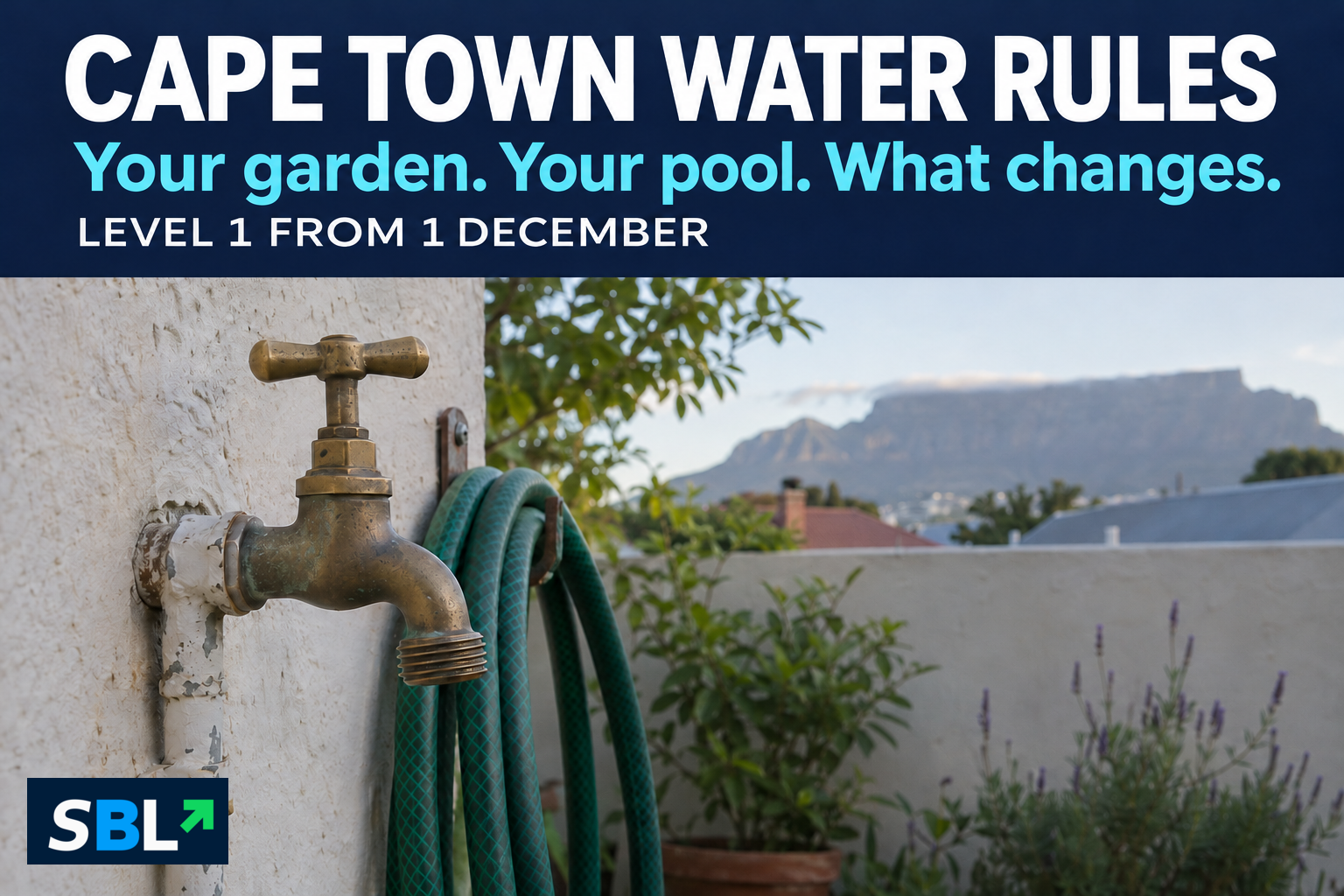
Cape Town’s Level 1 water restrictions start on 1 December 2026. Residents, visitors and businesses are being asked to cut consumption by at least 10%. The practical question is not simply whether you can water a garden or fill a pool, but how your routine must change.
The December rules at a glance
The City’s 16 November announcement sets these outdoor rules for municipal drinking water:
- Gardens: sprinkler, trigger-nozzle hosepipe or drip watering on Tuesdays and Saturdays, up to one hour daily in total, before 09:00 or after 18:00. Buckets and watering cans have the same watering times and one-hour limit.
- Sports fields and public parks: sprinkler watering on Tuesdays and Fridays, up to one hour, before 09:00 or after 18:00.
- Pools: filling and topping up remain permitted; cover pools when unused. Use rainwater for top-ups and recover backwash water where practical.
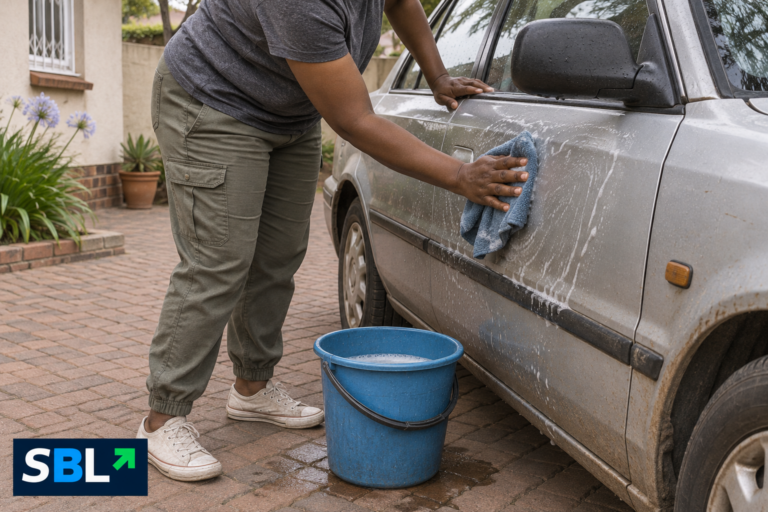
- Private and informal car washing: buckets or high-pressure, low-volume equipment.
The City’s 85 litres per person per day is guidance, not described as an individual legal quota.
Some rules were already there
Do not confuse the December start date with permission to ignore existing requirements. The City’s permanent water-saving guidance already prohibits hosing paved surfaces with municipal drinking water, requires unused pools to be covered and requires commercial car washes to recycle or reuse at least half their water. Municipal-water-fed automatic float-valve top-ups for pools and garden ponds are not allowed.
The City’s regulations page links the Water By-law and its amendments. Some general webpages still refer to older summers and restrictions having ended in 2020; use the dated November announcement for the new December arrangements.
Turn the warning into a household plan
Start with litres, not the rand total on the bill. The City recommends monitoring average daily use and checking unexpectedly high consumption for leaks. Your municipal invoice includes daily average usage, and a meter reading can help track progress.
Illustrative calculation: a household using 20 kilolitres over 30 days would need to save 2 kilolitres to reduce consumption by 10%, leaving 18 kilolitres. That is about 67 litres less each day. The calculation is 20 × 0.10 = 2 kilolitres; 2,000 ÷ 30 ≈ 67 litres. These are example inputs, not a household allowance or a prediction of bill savings.
Compare equivalent periods: a longer billing cycle or extra holiday guests can make a raw monthly total misleading. Record both the number of days and the number of people when deciding whether your own saving plan is working.
A practical checklist for businesses
SBL’s practical recommendation is to turn the rules into named responsibilities before December: who resets irrigation timers, who checks the pool cover after guests leave, and who checks the cleaning contractor’s equipment? A general “save water” notice is less useful than a clear instruction for the person doing each job.
For a guesthouse, put the relevant guidance in arrival information rather than leaving visitors to discover it. For a car wash, check the recycling system and working practices rather than assuming that using a pressure washer settles every requirement. Keep a simple record of meter readings so a saving claim can be checked against actual consumption.
The useful distinction: a permitted activity is not unlimited use. Plan the work, allocate responsibility and measure the result.

Leave a Reply