
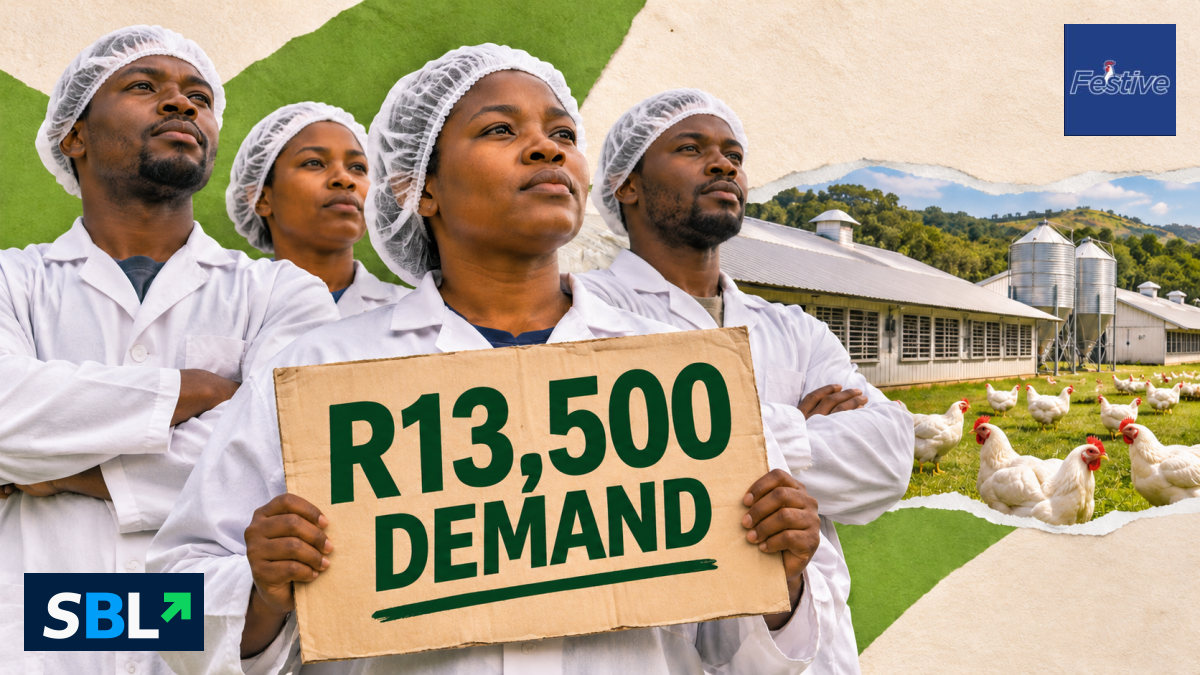
Editorial illustration of a poultry-sector wage dispute. Festive logo: Astral Foods.
The Festive Chicken strike has spread to two breeder farms near Krugersdorp, bringing more parts of Astral Foods’ poultry business into a dispute over pay, benefits and permanent employment.
GroundUp reported on 16 November that employees at the Tweefontein and Glenhill farms had joined the action that began on 29 October. The central demand remains R13,500 a month.
Astral Foods’ Festive business page describes breeding and hatching operations linked to its Olifantsfontein processing facility.
For workers and households following the dispute, that headline amount is only part of the question. Any agreement would also need to explain whose pay changes, what the figure includes and when the terms take effect.
What the Festive Chicken strike is about
The Casual Workers Advice Office’s 29 October statement set out the R13,500 demand. It described different earnings and working hours at the factory and farms. Those are the organisation’s accounts, rather than an independently audited payroll comparison.
A Congress of South African Trade Unions Gauteng statement published on 11 November also listed medical aid, permanent employment and improved working conditions among the demands. It called for renewed negotiations.
Astral disputes affordability and participation figures
In a company statement reported by eNCA on 10 November, Festive said the demands were financially unaffordable. It said it did not recognise the Simunye Workers Forum and that two recognised unions represented most employees. This reports the company’s bargaining position; it does not decide the legal status of the action.
GroundUp’s later report records competing participation figures. Worker representatives put the number above 1,000, while Astral put participation at about 400 of the Olifantsfontein plant’s 2,500 workers. The plant-specific figure should not be presented as a verified count across every affected farm and operation.
Four details that would make a settlement meaningful
SBL’s assessment is that a useful settlement announcement would need to answer four practical questions. These are checks for reading an agreement, rather than terms either side has accepted.
- What does the wage figure mean? A basic wage, total earnings before deductions and take-home pay describe different amounts. Compare the same basis before calculating a percentage increase.
- Which hours and benefits does it cover? Ordinary hours, overtime, allowances and medical-aid contributions affect what a household receives and pays. A single monthly figure cannot explain all of them.
- Which workers are included? The agreement should identify the workplaces, job categories and employment arrangements it covers. A factory settlement would not automatically establish the position at every farm.
- When do the terms start? A signed effective date, any back pay and the arrangements for returning to work matter more than an announcement that talks are progressing.
What remains unknown
The reports reviewed do not establish a settlement date or quantify the strike’s effect on chicken deliveries or retail prices. The expansion of the action alone does not establish a shortage or a price increase.
The immediate development is a wider wage dispute. The next substantive test is whether the parties produce clear, comparable terms that workers can understand and that the business says it can implement.
Sources
- Astral Foods: Festive breeding, hatching and Olifantsfontein processing operations, undated
- GroundUp, Seth Thorne: Poultry worker strike expands to Krugersdorp, 16 November 2026
- Casual Workers Advice Office: strike statement, 29 October 2026
- Congress of South African Trade Unions Gauteng statement, published 11 November 2026
- eNCA: company response and wage deadlock, 10 November 2026
Leave a Reply