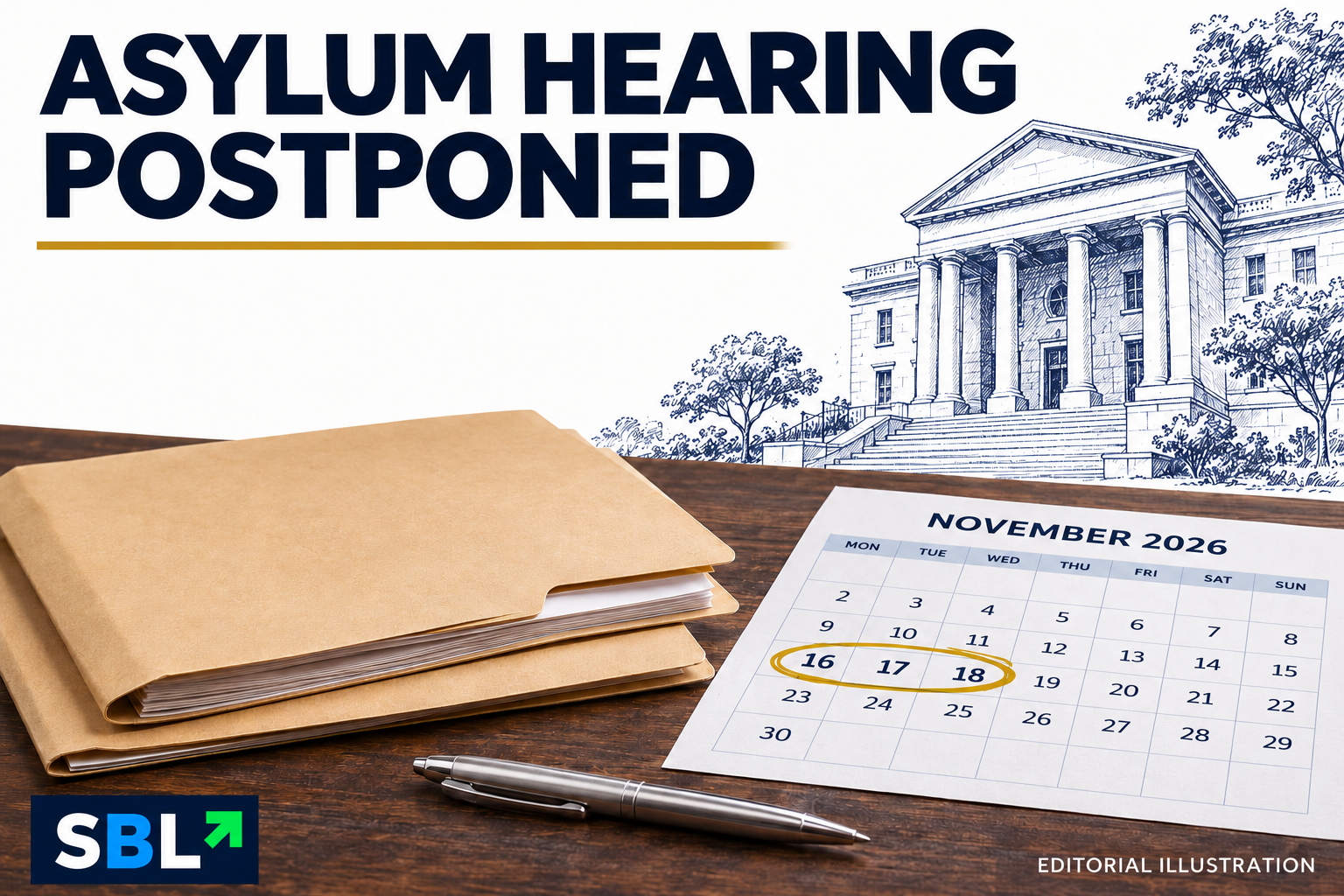
The full-court hearing previously scheduled for 29 October will now run over three days. The court timetable and Home Affairs’ separate registration-system target should not be confused with a ruling or a confirmed service launch.
AI-assisted reporting. Prepared 8 November 2026; last checked at 06:29 SAST. Publication authorised by Tristan van Niekerk.
The Gauteng High Court in Johannesburg has rescheduled its full-court hearing on the detention of prospective asylum seekers for 16–18 November 2026, according to the Office of the Chief Justice’s 28 October statement.
This is an update to SBL’s 27 October report, which reflected the earlier 29 October hearing date. The postponement was announced last month; it is not a new decision made today.
Why the hearing needs more time
The judiciary says the proceedings comprise 33 urgent applications concerning undocumented foreign nationals who express an intention to apply for asylum. The referral followed differing judicial approaches and is intended to bring greater consistency to the handling of these cases.
The case expanded after enrolment. Five friends of the court and two intervening parties had been admitted, while additional constitutional issues and submissions increased the material to be considered. The original one-day allocation was consequently extended to three hearing days. These are procedural developments, not findings about the merits of individual claims.
Two dates, two different processes
Home Affairs’ proposed registration and appointment system has a separate 10 November implementation target. At its 11 October briefing, the government described a process through which first-time applicants would record an intention to seek asylum and receive an appointment at a Refugee Reception Office.
That announcement distinguished the proposed receipt from a section 22 visa or recognition as a refugee. Registering an intention would start an administrative process; individual claims would still need to be considered.
The sources checked for this update do not establish that the platform is already operating. Nor does a later court hearing, by itself, prove that the administrative target has been postponed. A confirmed launch and the actual instructions for applicants require separate verification.
What readers should watch next
For applicants, legal representatives and organisations assisting them, the immediate task is to distinguish a scheduled hearing from an order already issued, and a promised service from an accessible one. Neither headline supplies an answer about a particular person’s status or detention.
SBL will need to check any further court notice before reporting the hearing as underway. For the registration process, the relevant evidence will be Home Affairs’ official launch notice, access instructions and published conditions. This article provides general reporting, not individual legal advice.
Sources and verification
The hearing dates and procedural background come from the Office of the Chief Justice’s 28 October statement, corroborated by Channel Africa on 29 October. Registration details are attributed to the 11 October government briefing. No outcome of the November hearing is claimed.
Image: AI-generated editorial illustration for SBL, showing the revised hearing dates. Not a photograph of court proceedings.
[…] is a new administrative development following SBL’s earlier coverage of the separate asylum-detention hearing. Launching software is not a court ruling on anyone’s individual […]