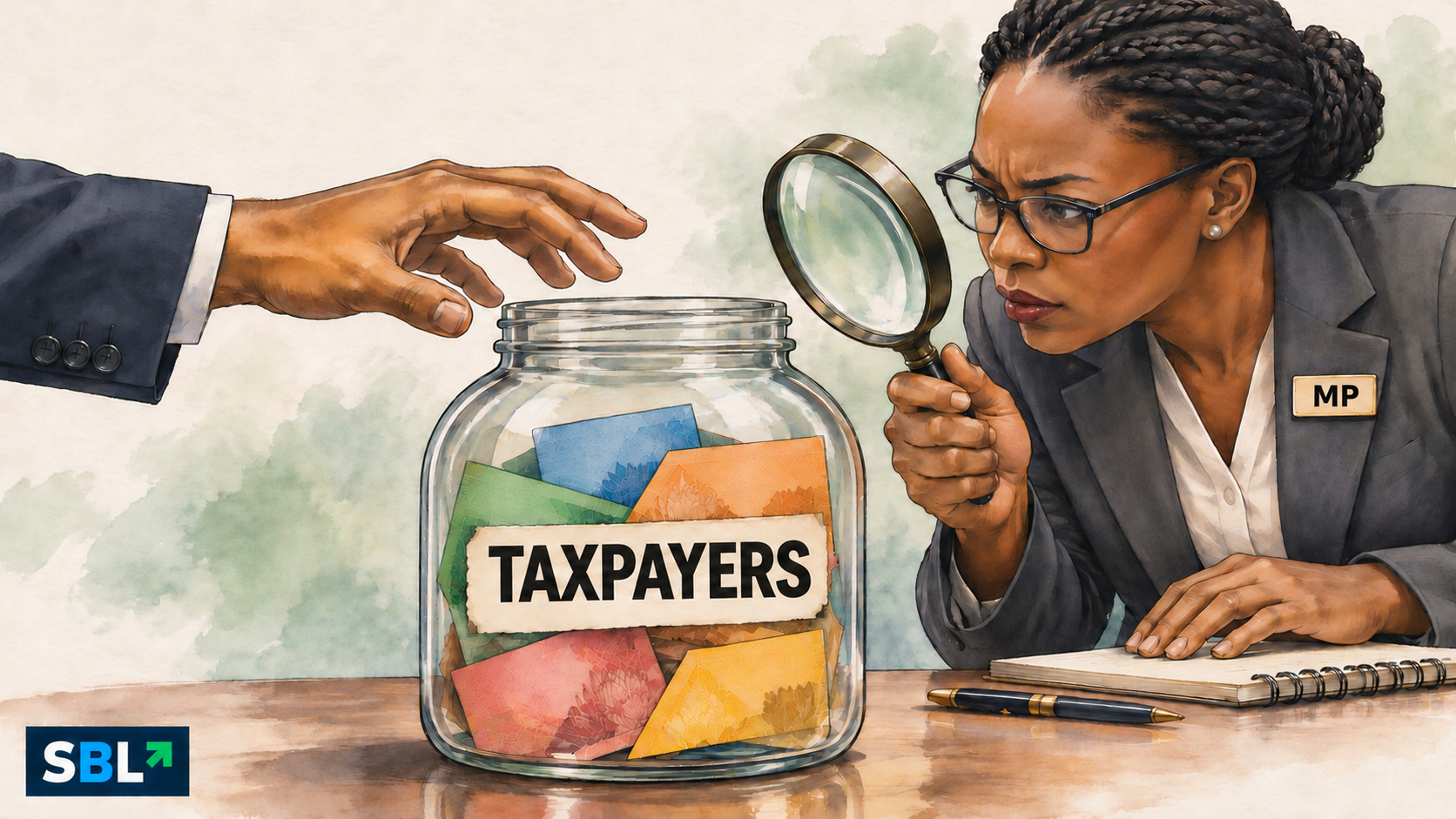
Editorial illustration, not an actual scene.
MPs want government departments to show what happens after lifestyle audits uncover concerns, as Public Works faces scrutiny over employees suspected of doing business with the state.
In a statement issued on 11 November 2026, Parliament said six Public Works employees had been flagged over suspected state business involving about R9.8 million. Nineteen employees had companies registered on the Central Supplier Database.
The statement said investigations were ongoing. It did not announce convictions or establish that R9.8 million had been stolen.
MPs want completed cases
The Portfolio Committee on Public Service and Administration heard from six departments. Chairperson Jan de Villiers called for fuller reporting on completed investigations, disciplinary outcomes, prosecutions and delays.
Members also raised the independence of ethics officers and the risk of investigations stalling when officials resign or contracts expire. Departments were urged to protect procurement and public resources while cases are investigated.
What a lifestyle audit can establish
A supplier-database registration, an allegation and a criminal conviction are different stages of evidence. Treating them as interchangeable would give readers a misleading picture of the case.
The Department of Public Service and Administration’s practical ethics guidance describes lifestyle reviews as an extension of financial disclosure. Officials’ disclosed interests, income and assets are assessed for discrepancies, and employees should be asked to explain those discrepancies.
The guidance calls for further investigation where explanations are inadequate, consideration of disciplinary action and referral to law enforcement when a criminal offence is suspected. An initial warning sign therefore requires a process that can test the evidence and reach a defensible outcome.
Why suppliers and taxpayers should care
For businesses bidding for public work, the practical issue is whether decisions are made fairly and conflicts are detected before they distort competition. For taxpayers, the question is whether the oversight process protects spending intended for services.
A useful follow-up would distinguish concerns that were explained, cases that led to sanctions and matters referred for criminal investigation. It would also make clear which cases remain open. That would let the public assess both accountability and fairness, rather than judge progress by the number of audit flags alone.

Leave a Reply