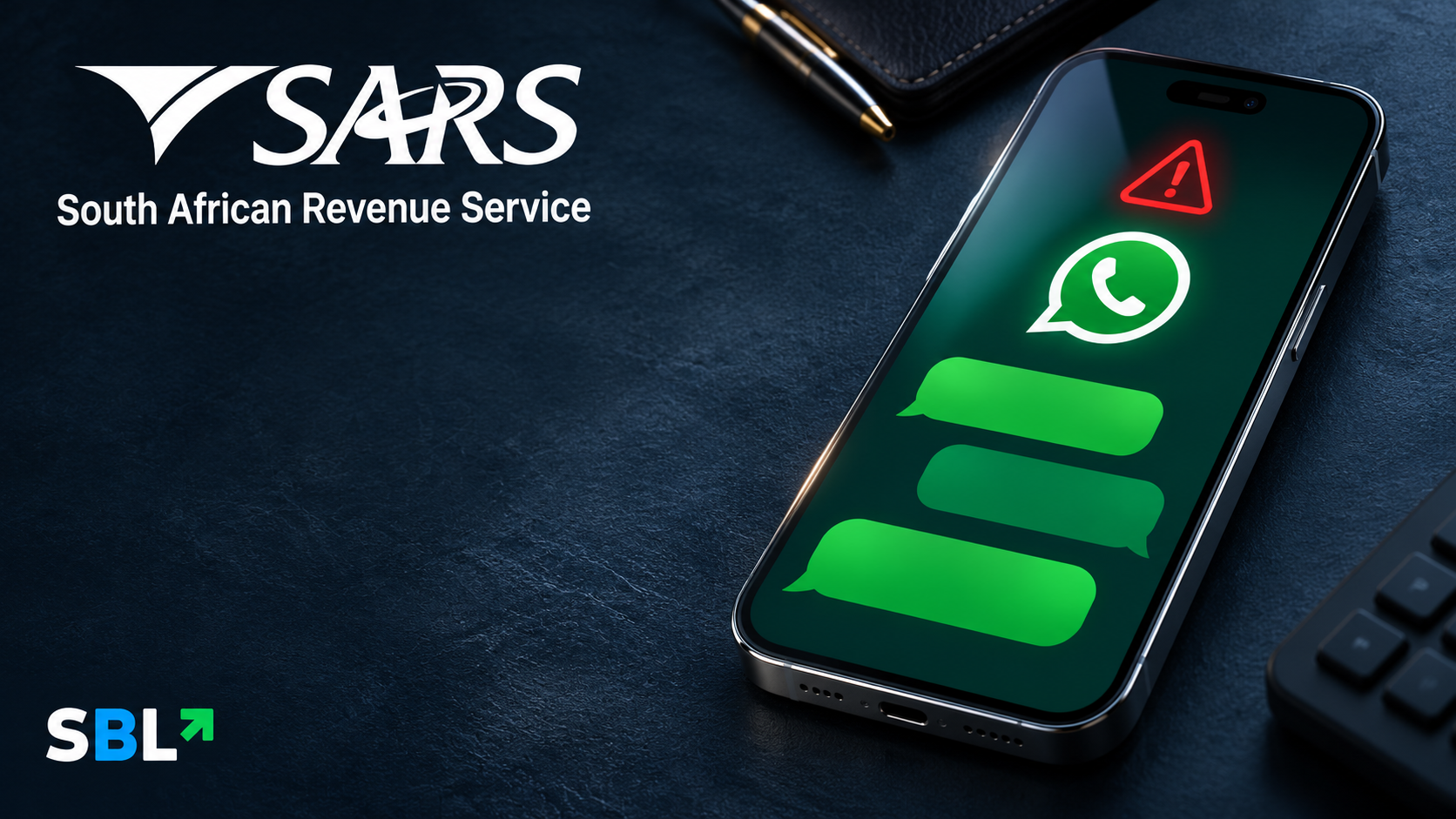
A WhatsApp profile claiming to be the SARS Commissioner is being used to call taxpayers about outstanding debt. SARS issued a warning on 11 November 2026, saying the Commissioner does not phone individual taxpayers about payments.
For anyone receiving such a call, the immediate question is whether the debt can be verified independently. A name, photograph or senior title on a phone screen is not proof that the caller represents SARS.
What should make you stop?
SARS says it will never ask for passwords, one-time PINs, banking PINs or eFiling login details through calls, emails, SMSs or social media. Do not hand over those details to someone claiming to help you resolve a tax problem.
The latest notice identifies an impersonation scam, but gives no victim count or total financial loss. It should not be read as evidence that every taxpayer has been targeted.
How to check a tax-debt message
SARS sets out the following checks in its guidance on WhatsApp debt messages:
- Check your debt directly in SARS eFiling or the SARS MobiApp. Legitimate debt should appear on your SARS profile.
- Compare the message with the campaigns listed on SARS’s Current Surveys, SMSs and Emails page.
- Check the official scam examples. If you suspect fraud, do not reply.
- Verify the communication through SARS’s official contact channels before paying or sharing personal information.
SARS also warns against opening links in such messages and says it does not provide a SARS bank-account number for payment in a WhatsApp message or letter. Open the official service yourself rather than following instructions from the caller.
WhatsApp alone does not prove a scam
SARS does operate official WhatsApp tax services. The distinction matters: the warning concerns an impersonator claiming to be the Commissioner, not a blanket instruction to ignore every SARS communication delivered through the app.
For small businesses, a useful payment control is to separate the incoming demand from the approval process. Ask the person responsible for tax to check the business’s SARS profile, and verify payment instructions independently before releasing money. A caller’s apparent seniority should not override that check.
Suspicious calls or emails can be reported to [email protected] or the SARS Anti-Corruption Hotline on 0800 00 2870.
Image: AI-generated editorial illustration, not a screenshot of the fraudulent profile.
Leave a Reply