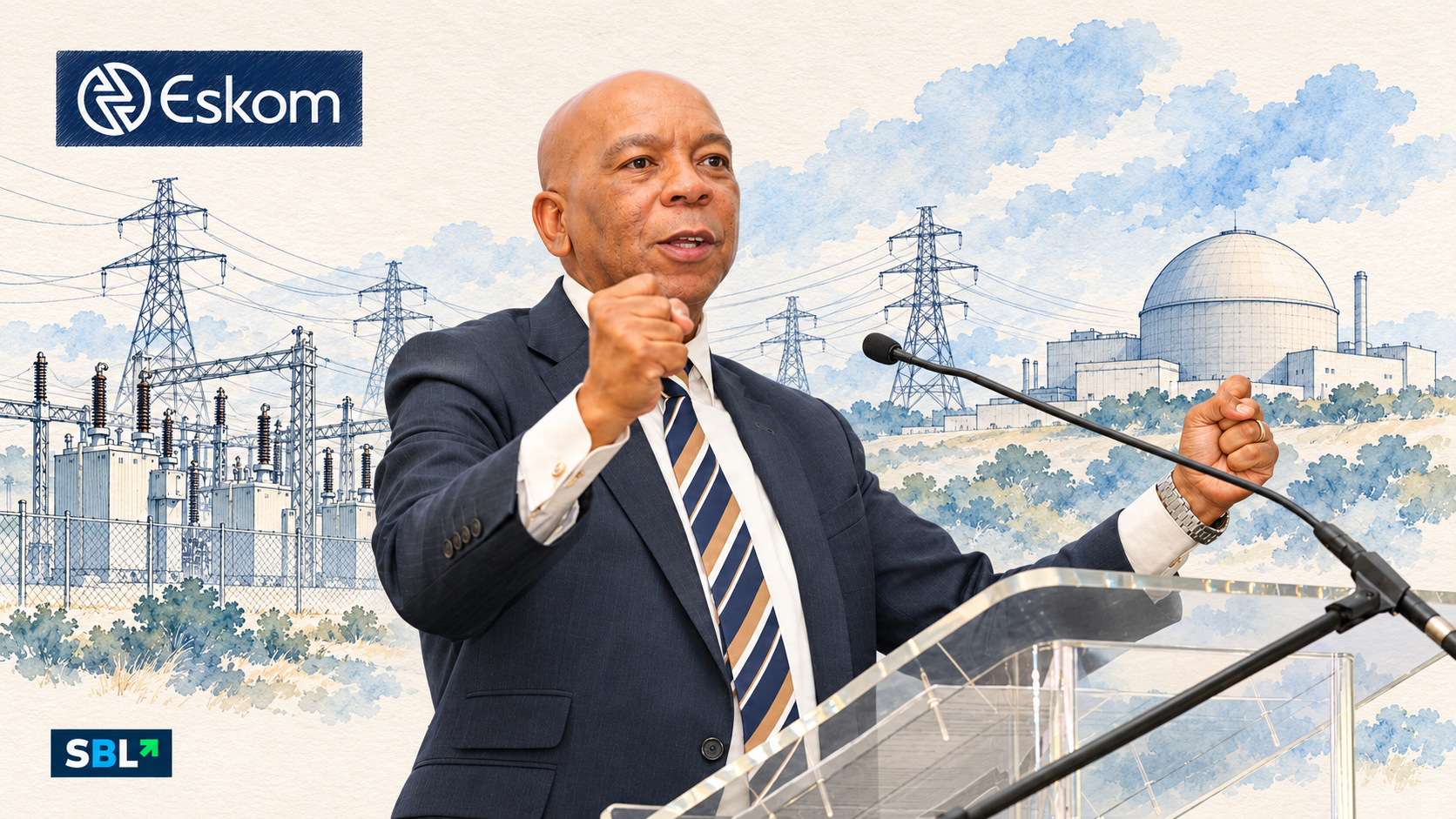
Editorial illustration based on a SAnews photograph. Image: SAnews / SBL.
South Africa’s plan for 5,200MW of new nuclear power has reached another preparatory step: Eskom has submitted its feasibility report. The financing decision that will help determine what electricity users pay still lies ahead.
In his 10 November conference speech, Electricity and Energy Minister Kgosientsho Ramokgopa said he intends to publish the procurement-enabling determination before June 2027, after public submissions and the required consultations.
What has changed?
The department is preparing the proposed determination for public participation. Ramokgopa said the process requires consultation with the energy regulator and Finance Minister. Publishing the determination would trigger procurement.
That is an important distinction for readers: the latest announcement concerns preparation for buying new capacity. It does not announce a construction start or an immediate reduction in electricity bills.
Who carries the cost?
Ramokgopa said financing options would be assessed against tariffs, Eskom’s balance sheet and the state’s exposure. Borrowing costs and construction time matter: delays can add interest while other electricity must be bought to cover the wait.
The speech does not provide a final project price, financing agreement or quantified household saving. Those remain essential information for judging the proposal.
SBL analysis: The useful test is therefore wider than whether a plant can produce electricity reliably. Readers need to know who funds construction, who absorbs overruns and how those obligations reach tariffs or public finances. A promising generation cost does not, by itself, answer those questions.
The skills gap behind the plan
SAnews’s report of the conference highlights another constraint: Ramokgopa acknowledged a shortage of people with nuclear construction experience. Running an existing station and building a new one require different experience.
He proposed developing engineers through international partnerships and successive projects. He also said lessons from Medupi and Kusile should inform planning. These are proposed safeguards, not proof that cost or delivery risks have been resolved.
Why consultation matters
Engineering News editor Terence Creamer, reporting on Polity, says the department plans a 60-day comment period for its nuclear case document and a roadshow in early 2027. His report recalls the 2017 court ruling against an earlier procurement process and the withdrawal of a later notice in 2024 amid consultation concerns.
Readers should use the official consultation notice for the opening date, deadline and submission instructions.
For households and businesses, the next meaningful milestones are the consultation documents, the financing terms and the allocation of delivery risk. Those will make the proposal easier to assess than the capacity target alone.
Leave a Reply