
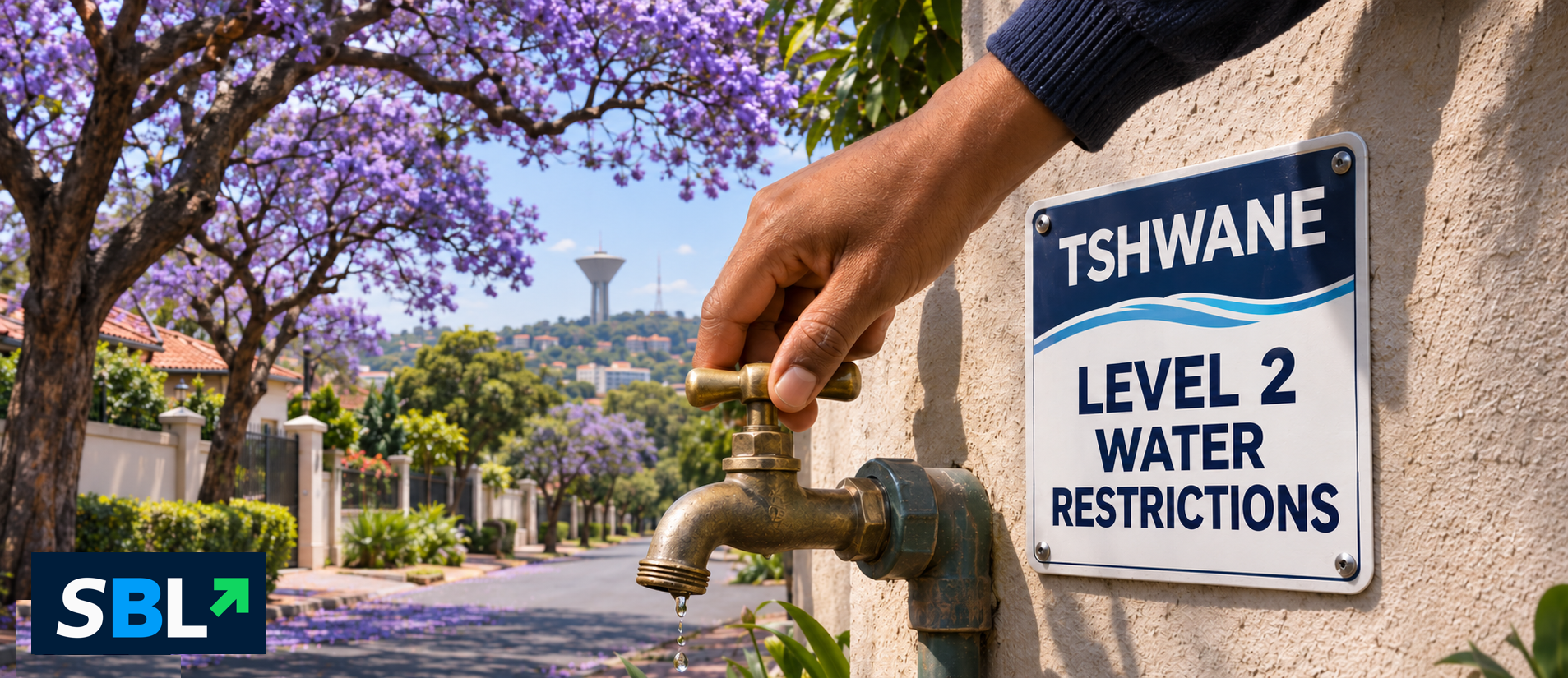
SBL editorial illustration. The scene and sign are illustrative, not a photograph of an actual municipal notice or inspection.
Tshwane water restrictions mean changes for homes and businesses, while a separate supply closure puts more neighbourhoods at risk of low pressure. The practical priorities are to cut avoidable use, check your reservoir’s supply area and keep track of your meter readings.
In its updated Level 2 notice, the city says restrictions and tariff adjustments take effect from 16 November 2026. It attributes the wider strain to demand exceeding available treated-water supply, rather than simply a lack of water in source dams.
What changes under Tshwane water restrictions?
The city directs customers to avoid using municipal drinking water on gardens, lawns and swimming pools. For washing vehicles, it specifies a bucket instead of a hosepipe. It also calls for leaking plumbing to be repaired, shorter showers, less unnecessary running of taps and appropriate greywater reuse for non-drinking purposes.
Businesses and institutions must introduce internal conservation measures to reduce daily consumption. The notice does not provide a blanket commercial exemption. It warns of inspections and enforcement, alongside higher tariffs and category-specific exemptions.
Which areas face supply interruptions?
A separate city notice says incoming supply to the Garsfontein reservoir system was closed at 10:00 on 17 November. Rand Water had warned that its system was critically strained.
Stored water would continue serving customers, but falling levels could cause low pressure or interruptions. The city’s reservoir-by-reservoir list includes parts of Mamelodi, Eersterust, Moreleta Park, Faerie Glen, Lynnwood, Montana, Sinoville, Queenswood and Waverley.
This is an affected-area warning, not confirmation that every property has lost supply. Check the full list for your reservoir area. The notice provides no reopening time and says Rand Water and Eskom are addressing a power outage affecting supply.
What businesses can do today
A useful operational response is to check for leaks, identify activities that need continuous water and postpone discretionary uses such as outdoor washing. Assigning someone to record daily meter readings can help identify unusual consumption. These are practical planning steps, not a guarantee against interruptions or an exemption from restrictions.
Check the account before assuming what you owe
Compare the billing period, recorded meter readings, consumption and tariff category. Check any separate network charge and whether an exemption applies to your account. A generic tariff example cannot establish an individual household’s bill.
Tshwane’s meter-reading instructions allow submissions through e-Tshwane or [email protected]. Use the city’s template and billing calendar: readings supplied outside the correct dates may not be captured.
For an account query, email [email protected] or call 012 358 9999. The city’s dispute procedure says a formal dispute follows the general complaints process if you disagree with its outcome. Keep the account, a dated meter photograph and your query reference together.


Leave a Reply