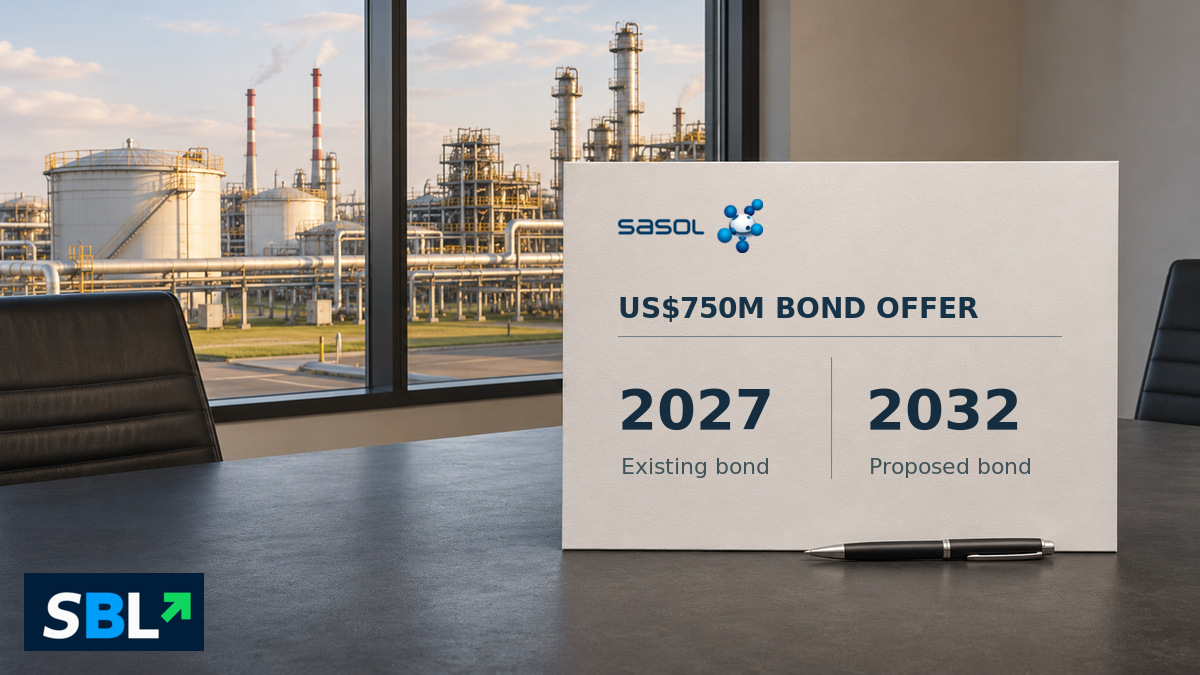
Editorial illustration of a bond briefing at a generic petrochemical site. Sasol mark sourced from Sasol.
Sasol priced US$750 million in convertible bonds on 17 November at an annual coupon of 2.875%, with repayment due in 2032. In a separate offer, it invited eligible holders of its US$750 million convertible issue due in 2027 to sell their bonds back.
The transactions could ease Sasol’s 2027 repayment pressure. The amount depends on how much of the old issue the group buys back and cancels. Bonds left outstanding remain subject to their existing terms and the issuer’s redemption rights.
How much 2027 debt could Sasol retire?
Sasol offered US$215,000 plus accrued interest for every US$200,000 of old bond principal, a 7.5% premium to face value. If Sasol bought back all US$750 million outstanding at that price, it would pay US$806.25 million before accrued interest. The final cash cost depends on how much it accepts.
Sasol’s 2026 annual financial statements put the old bond’s maturity on 8 November 2027 and its annual coupon at 4.5%. On the same US$750 million of principal, the annual coupon would be US$33.75 million on the old issue and about US$21.56 million on the new one. That compares annual interest payments. The buyback premium, transaction costs and any old bonds left outstanding affect the overall cost.
Sasol expects to use the net proceeds for general corporate purposes, including the repurchase and debt refinancing. It expects to issue the new bonds around 24 November 2026. Accepted repurchases are also due to settle around that date, subject to the offer terms.
What ordinary shareholders should watch
A convertible bond pays interest and gives investors a right to convert under defined terms. Sasol set the initial conversion price at US$18.8073 per ordinary share, a 42.5% premium to its volume-weighted Johannesburg share price between the opening of trading and pricing on 17 November, converted to US dollars. The conversion period ordinarily starts on 24 November 2031, with earlier windows possible after specified events.
Shareholder approval would let Sasol settle eligible conversions with new or existing ordinary shares. The company could also choose cash or a combination of cash and shares. Before or without that approval, conversion would be settled in cash equal to the value of the shares under the terms. New shares could reduce existing shareholders’ percentage ownership. A cash settlement would use company cash.
What to look for next
The repurchase invitation was set to close at 18:30 SAST on 17 November, subject to change. Sasol said banks or brokers holding bonds on behalf of eligible holders could set earlier deadlines. The next figures to watch are how much principal Sasol accepts for repurchase and how much 2027 debt remains after settlement.
Leave a Reply