
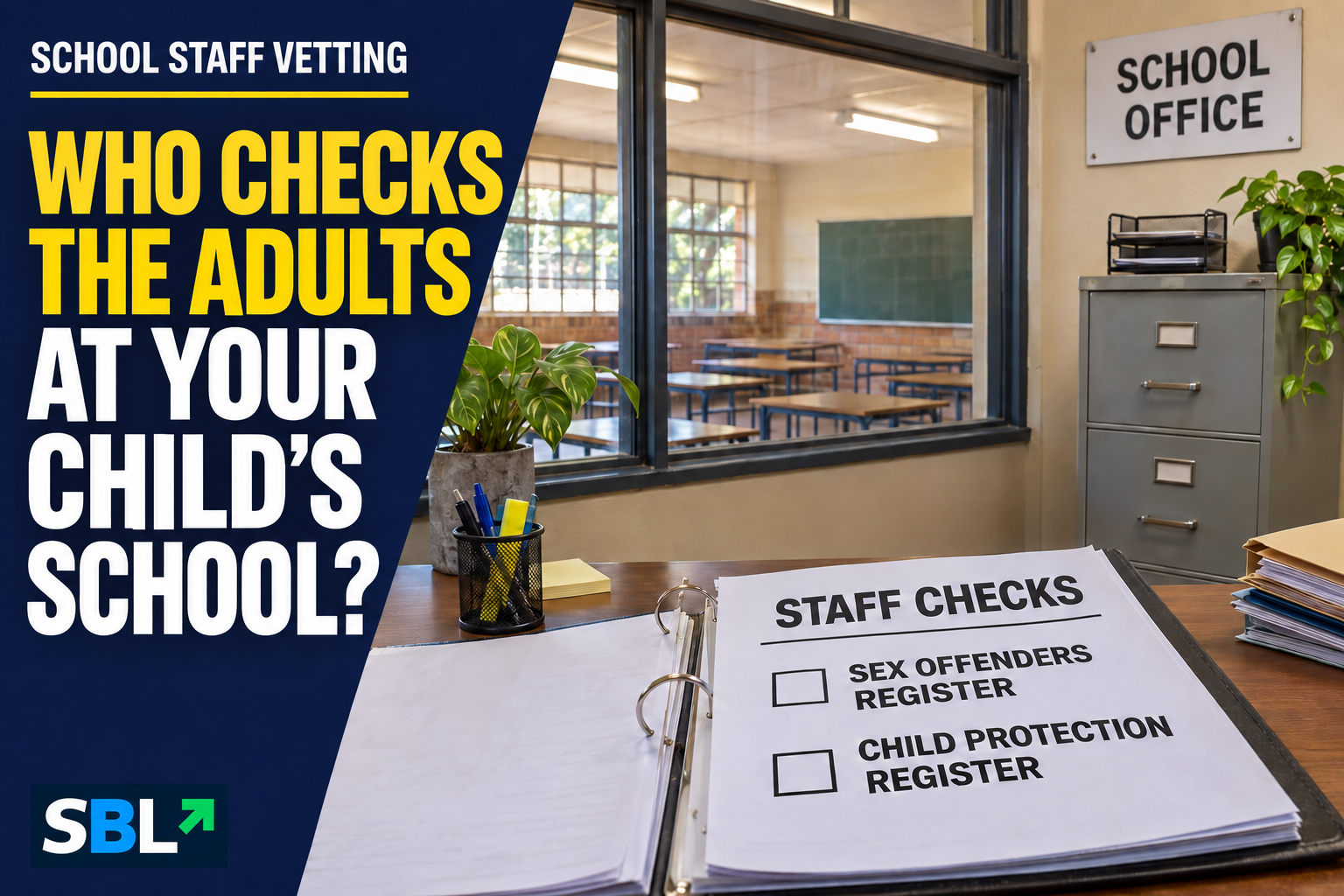
You check the fees, the uniform and the school results. But who checks the adults your child spends the day with?
Parliament’s Basic Education Committee raised fresh concerns on 17 November about delays in school staff vetting. For parents, the useful question is whether the school can explain which checks are complete, which are outstanding and who is responsible for following up.
What the latest figures show
Against a target of 458,446 employees who work directly with children, provincial education departments had submitted 159,253 applications to the National Register for Sex Offenders by 31 October. Of those, 84,248 clearance certificates had been issued and 75,005 applications remained in the processing backlog. Another 299,193 applications had not been submitted.
These are figures for one register, not a count of staff cleared against both safeguarding registers. Outstanding paperwork also does not establish that an employee is an offender.
The committee flagged inconsistent departmental figures. Justice officials cited capacity constraints, manual processes and rising demand. Source: Parliament, 17 November 2026.
Two registers, separate checks
The National Register for Sex Offenders is held by the Department of Justice and Constitutional Development. The National Child Protection Register is held by the Department of Social Development and includes findings that people are unsuitable to work with children because of abuse, neglect or exploitation.
The Department of Basic Education’s written reply to Parliament explains that checks against both registers are required. A general assurance that someone has been “screened” should therefore prompt a follow-up question: which checks were completed? Source: Basic Education’s 2025 reply to question 1819.
Who must arrange the checks?
The same reply separates responsibility according to the employer. Provincial education departments are responsible for staff in state-funded public-school posts. School governing bodies are responsible for employees in posts they create and fund. Independent-school owners are responsible for their employees.
Private schools are not exempt: the department explicitly says they must comply with the same vetting laws and procedures. Paying school fees is not, by itself, evidence that those checks have been completed.
Four questions to ask your school
SA Business Lens suggests asking for a written explanation of the process, rather than circulating allegations or requesting employees’ private records:
- Have the required checks against both registers been completed for the people working with learners?
- Where checks are outstanding, have applications been submitted, and who is following them up?
- How does the school handle safeguarding for support staff, volunteers and contractors?
- Who should a parent or learner approach with a safety concern?
This extends beyond classroom teachers. The department’s school-safety campaign covers support staff, volunteers and contractors, and names school transport and security services among its audiences. It also records that some principals reported not knowing about mandatory register checks during readiness visits in November 2025 and January 2026. Source: Basic Education’s Safe Schools campaign.
What would meaningful progress look like?
SA Business Lens analysis: A useful update would distinguish applications not yet submitted from those awaiting processing, and show completed checks against each register. That would make it easier to identify where action is needed without implying that every administrative delay is evidence of misconduct.
For an individual family, the national totals cannot answer whether a particular school has completed its checks. That is why a clear, school-specific response matters.



Leave a Reply