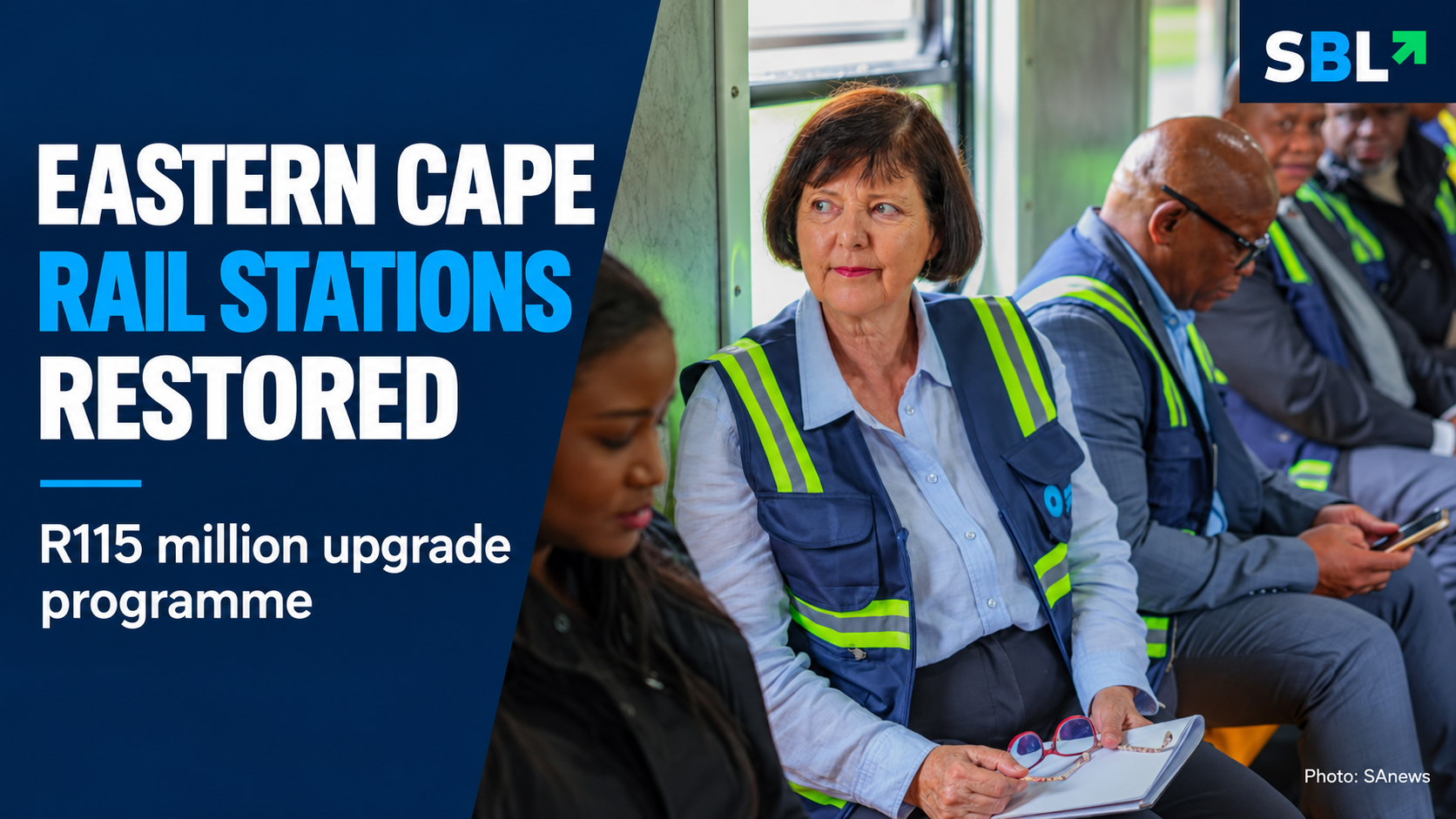
Seven refurbished stations on the East London rail corridor have been officially opened as part of PRASA’s wider Eastern Cape recovery programme. The improvements offer better passenger facilities, but the next test is whether they support dependable journeys and remain properly maintained.
Transport Minister Barbara Creecy opened the stations on Tuesday, 27 October. SAnews reported that seven stations on the KuGompo corridor and three in Gqeberha had been refurbished after pandemic-era vandalism.
What the investment covers
Creecy’s speaking notes put the provincial investment at R115 million over the past two financial years. That covers ten stations, including three in Gqeberha, rather than only the seven on the East London corridor.
The distinction matters when assessing the programme: the provincial budget should not be presented as the cost of Tuesday’s seven-station opening alone.
| Measure | Reported position | Period or qualification |
|---|---|---|
| Station investment | R115 million across 10 stations | Past two financial years, as reported on 27 October 2026 |
| Direct employment opportunities | 171 | Construction phase, not a permanent jobs total |
| Small businesses involved | 27 SMMEs | Refurbishment programme |
| Cleaning and maintenance agreements | 5 cooperatives | Three-year agreements |
| Stations still awaiting upgrades | 18 | Position reported on 27 October 2026 |
Source: Department of Transport, Creecy speaking notes, 27 October 2026, pages 3, 4 and 7. Figures are attributed official reports, not SBL audit findings. The speech does not identify the two financial years attached to the R115 million total.
Better facilities do not replace reliable services
The work includes restored sanitation, lighting and passenger platforms, with tactile features for visually impaired commuters. These are practical improvements to the station environment. They do not, on their own, establish how much a commuter will save or how long a door-to-door trip will take.
PRASA’s reported Eastern Cape on-time performance was 94.2% for the year to date ending the second quarter. Creecy also reported regulatory approval to raise operating speeds between Berlin and East London from 30km/h to 60km/h.
That speed change is not evidence that total journey times have halved. Stops, waiting times and the rest of a passenger’s route still matter. SBL has not independently checked current fares or timetables, so this article does not promise a particular saving.
The next test is keeping the gains
For local enterprises, the construction opportunities and maintenance agreements are different kinds of benefit. Temporary project work should not be counted as an ongoing job without evidence of continued employment.
For passengers, the useful measure is the service they can actually use: whether trains run when needed, facilities remain usable and disruption information arrives in time to make another plan.
Eighteen stations still require upgrades, according to Creecy. Her speech refers to work over the coming years but provides no station-by-station completion schedule.
SBL’s assessment: the reopening is a concrete infrastructure milestone. Its lasting value will depend on maintenance and dependable operations, alongside a clear delivery plan for the stations still waiting.



Leave a Reply