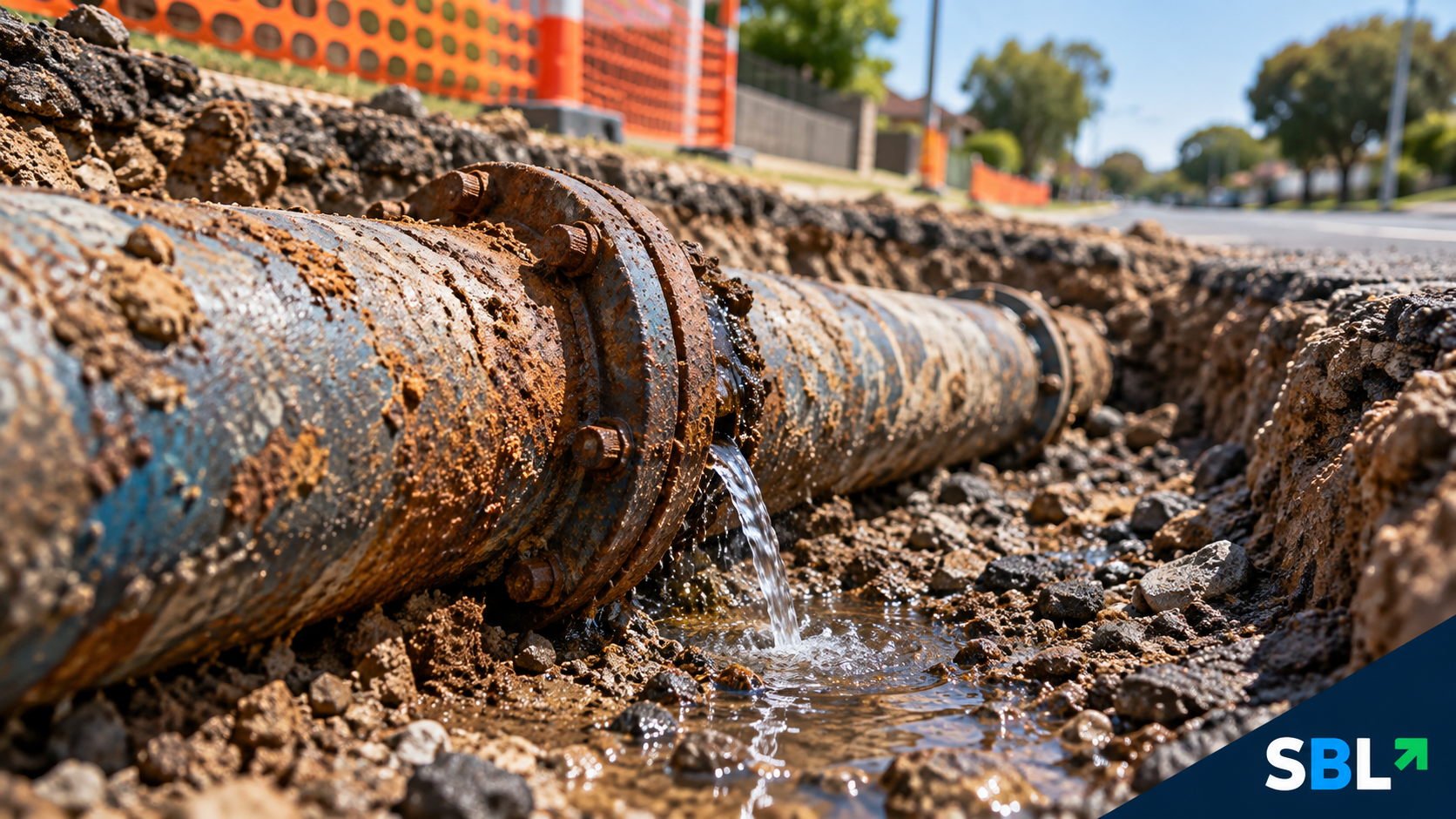
Jack Bloom puts Gauteng’s non-revenue water at about 48%. Fixing leaks and billing could help, but the national framework discussed in Boksburg remains a draft.
Gauteng’s water crisis demands attention to both broken infrastructure and the way municipalities measure and bill for water. Water and Sanitation Deputy Minister Jack Bloom told a Boksburg workshop on Tuesday, 27 October, that the province’s non-revenue water stands at about 48%, according to SAnews’s account of his remarks.
Bloom estimated physical leakage at 431 billion litres a year, valuing it at about R7 billion at Rand Water rates and at least R14 billion at municipal rates. Those are his valuations of the lost water, not two amounts to add together, an announced repair budget or savings already achieved.
Why 48% does not mean 48% leaks away
Non-revenue water is broader than water escaping from a burst pipe. A DWS response published by the Western Cape Provincial Parliament distinguishes three components:
- Physical losses: water lost through leaks.
- Commercial losses: including unauthorised connections.
- Unbilled authorised consumption: water used with permission but not billed.
DWS’s explanation of the No Drop programme also identifies faulty or missing meters and poor billing among the problems municipalities need to address. Its proposed responses include leak repairs, better metering, maintenance and pressure management.
The distinction matters when assessing progress. Recording previously unmeasured consumption can improve the water account without repairing a pipe. Conversely, a repaired leak can retain water in the network. Residents need to see whether reported improvements also produce more dependable supply.
Explore the reported figures
Compare your municipality
Tap a metro to explore Bloom’s figures. Open more than one to compare.
Johannesburg
What to ask: How much progress comes from repairing leaks, and how much from improving meters and billing?
Tshwane
What to ask: Which network repairs are funded, and how will the city measure the water saved?
Ekurhuleni
What to ask: What period do the figures cover, and how do they compare with earlier measurements?
Read the figures correctly: Physical losses are included in non-revenue water. Do not add the two percentages.
Source: Bloom’s remarks reported by SAnews on 27 October 2026. The report does not identify the measurement periods or underlying calculations. These are reported figures, not live readings.
Bloom also put non-revenue water above 70% in Emfuleni and above 60% in Mogale City.
The framework is still a proposal
The national Strategic Framework for Water and Sanitation Services should not be confused with a newly funded Gauteng repair programme. Cabinet’s July decision authorised publication for public comment. DWS said ahead of the workshop that it would assess submissions before the framework passed through the remaining approval processes.
The gazetted draft proposes a national non-revenue-water target below 25% by 2035 in its framework timeline, alongside a 2030 SDG-aligned column. It also proposes smart meters in 80% of urban households by 2032 and annual renewal of at least 10% of high-risk ageing asset systems, with a 2035 framework timeline.
These are proposed targets, not evidence of installations or repairs completed at Tuesday’s meeting. The sources reviewed do not establish a separate formal Gauteng adoption decision.
Where is the repair funding?
The draft’s asset-management provisions call for protected water-services finances, asset registers and budgeting across infrastructure’s lifetime. They provide a proposed approach to funding and maintenance, rather than a new rand allocation for each municipality.
There are existing interventions to measure against. In a 13 February statement, Gauteng’s government said leak repairs, pipeline replacement and pressure-management measures were under way, supported by ring-fenced infrastructure grants and reprioritised budgets. That earlier statement is not proof of their present completion or effectiveness.
Tuesday’s SAnews account provides no fresh itemised Gauteng repair budget or municipality-by-municipality delivery timetable. The useful next evidence would be funded work schedules, spending against those schedules and measured reductions in leakage.
What households and businesses should watch
For households, the practical test is reliable water at the tap and understandable bills. For businesses needing water for cleaning, production or customer service, repair schedules and credible restoration notices matter more to daily planning than a distant percentage target.
Useful questions for municipalities include which pipes will be repaired first, how meter errors will be corrected, how long repairs take and whether outages are becoming less frequent. A falling non-revenue-water percentage should be considered alongside those service measures.
Written comments on the draft close on 30 October 2026. SA Business Lens’s earlier framework explainer sets out the wider proposals and consultation details.
[…] Read story […]
[…] is a different story from the municipal leaks and billing weaknesses examined in SBL’s Gauteng water-loss report. The partnership concerns the capacity behind water-resource decisions. Its eventual value will […]
[…] Related reading: Gauteng water losses, leaks and billing […]