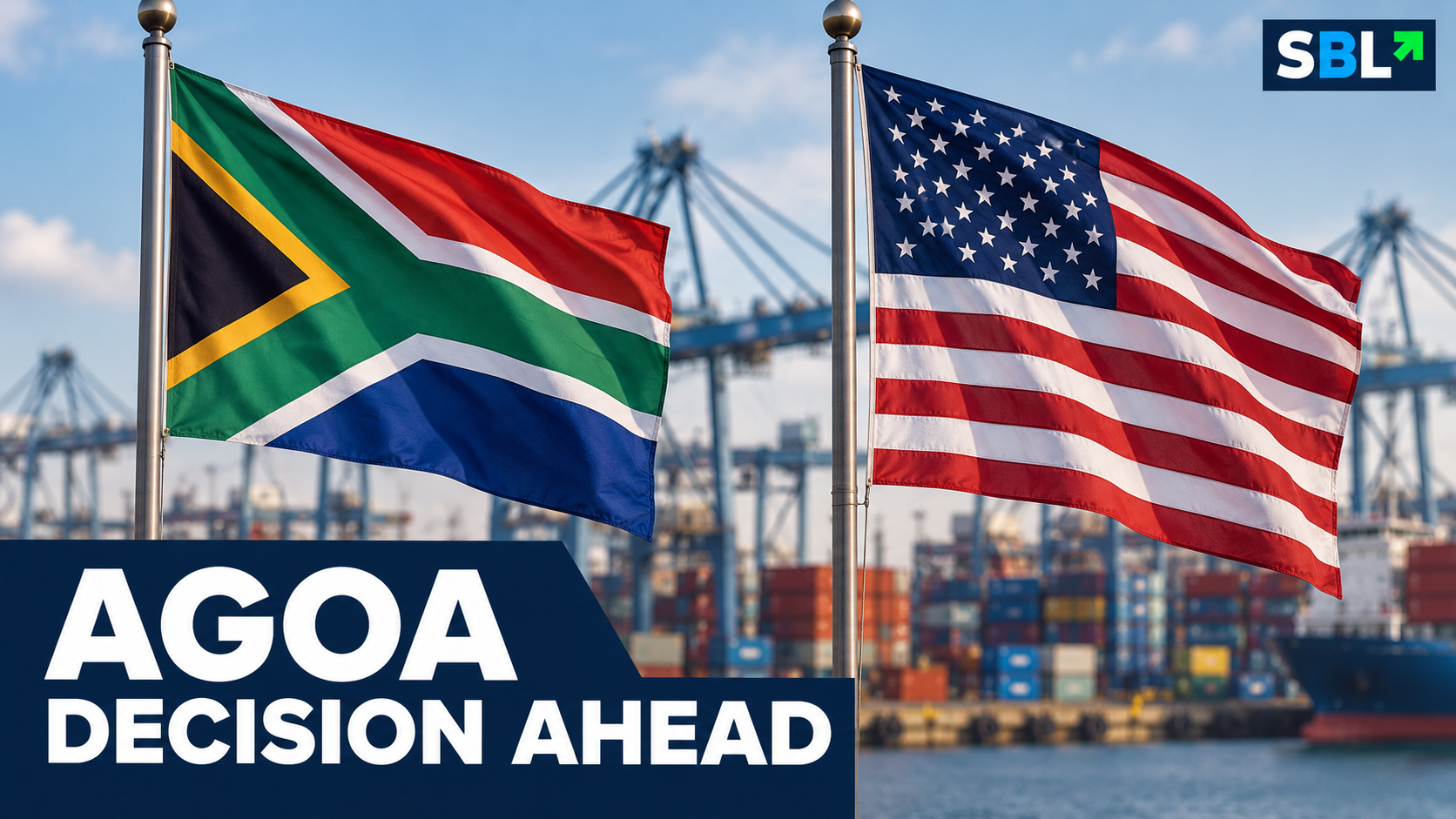
South Africa expects a decision on its AGOA eligibility for 2027 on Monday. The programme’s extension to 2028 leaves country access subject to a separate review.
South African exporters are approaching another decision point in their access to the United States market, with the Department of Trade, Industry and Competition expecting the outcome of the annual AGOA eligibility review on Monday, 2 November 2026.
The department gave that date in a 28 October advisory for Minister Parks Tau’s planned 29 October engagement with Nedlac stakeholders. It is South Africa’s stated expectation. No US decision on South Africa’s 2027 eligibility was located in the official sources checked for this report.
Two decisions with different consequences
The African Growth and Opportunity Act offers preferential access for qualifying goods from eligible sub-Saharan African countries. Extending the programme and retaining a country’s eligibility are separate steps.
Section 2008 of US Public Law 119-103, dated 2 September 2026, extended the relevant AGOA expiry provisions from 2026 to 2028. That establishes the programme’s longer horizon, but does not settle South Africa’s annual eligibility review.
The US Trade Representative’s 30 June notice launched the review for calendar year 2027. It explains that the US president assesses beneficiaries annually against requirements covering areas such as the rule of law, trade and investment barriers, anti-corruption measures and worker rights.
The notice also describes options to withdraw, suspend or limit duty-free treatment for particular products. The wording and scope of any eventual decision therefore matter, rather than only whether a headline describes South Africa as “in” or “out”.
What government has said
In SAnews reporting published on 30 October, Tau said government was preparing for the outcome, continuing discussions with Washington and pursuing other export markets. He expressed confidence in the offers South Africa had made during negotiations.
Those are the government’s assurances and negotiating position. They do not establish which decision the United States will take, or quantify how individual exporters would be affected.
What exporters should look for next
SBL analysis: The most useful next step is to read an official decision alongside the details of the goods a business actually ships. A country-level announcement alone cannot answer every commercial question.
- Scope: Does the decision concern the country’s overall designation or specified products?
- Timing: What effective date and transition arrangements, if any, does the official notice provide?
- Product treatment: Which tariff classifications and preference claims are relevant to the shipment?
- Commercial exposure: How do the verified changes affect the price quoted to a buyer, existing order terms and the business’s margin?
These checks give a more useful basis for planning than applying one assumed impact to every South African export. They also help keep broader US trade and investment figures separate from the narrower question of trade that actually uses AGOA preferences.
For workers and suppliers, the issue is whether any change feeds through to orders and production. This report makes no estimate of jobs at risk: that would require evidence on the affected products and businesses, as well as the final decision.
Sources and scope
Prepared on 31 October 2026 from the dtic advisory, SAnews’s account of Tau’s position, the USTR review notice and the US legislation linked above. The June notice’s original end-2026 expiry reference predates the September extension. The anticipated announcement date is not a verified US publication schedule. Product-specific customs treatment requires separate checking.


Leave a Reply