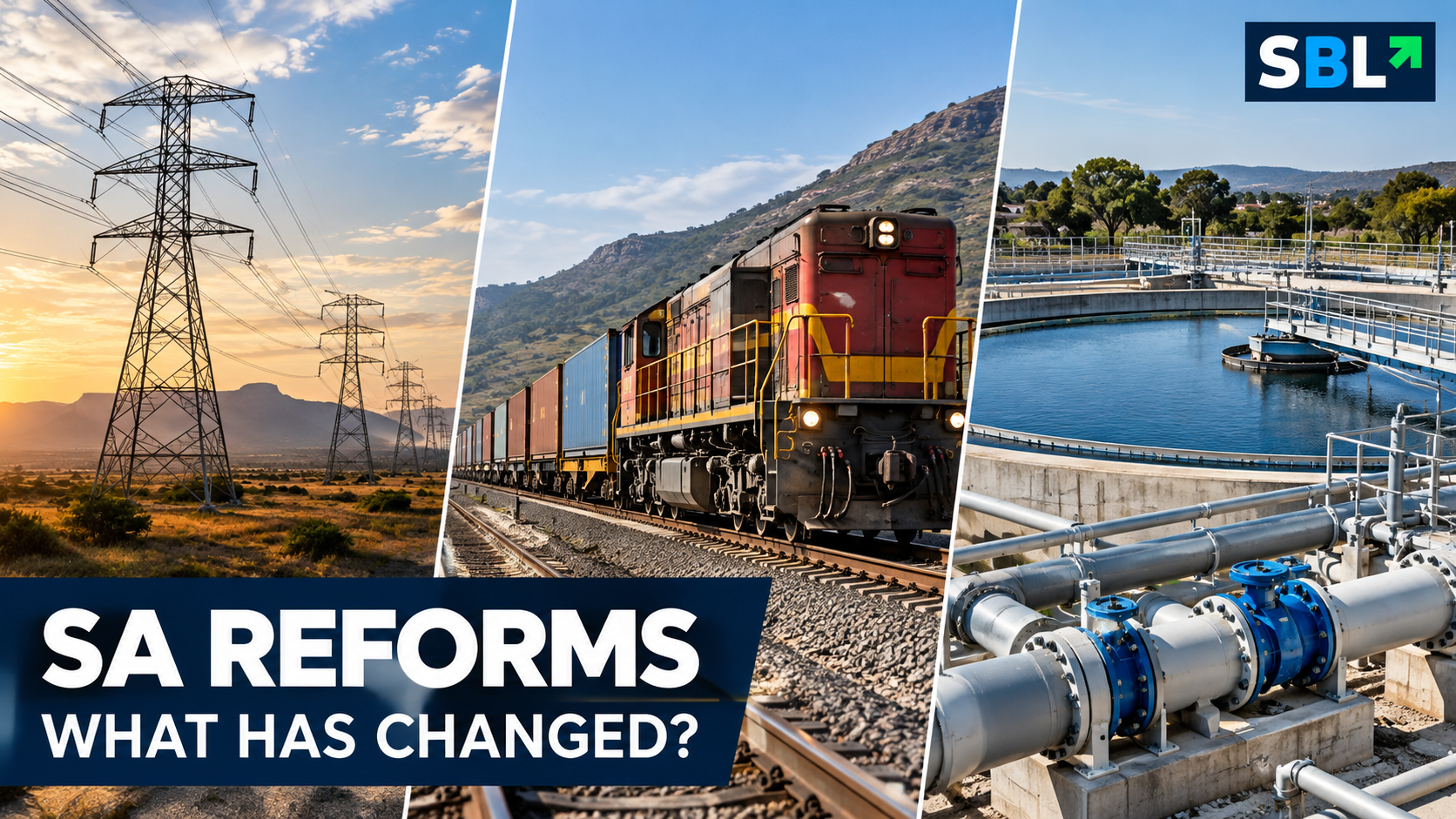
The latest Operation Vulindlela report records progress, but several services and funding milestones remain in testing or preparation. Here is how to read the difference.
South Africa’s latest reform update offers a useful test for households and businesses: which changes can people use, and which still require further decisions, testing or implementation?
The Operation Vulindlela Phase II 2026 Q2 report, released on 30 October, updates implementation since July 2026. The joint Presidency and National Treasury programme covers electricity, freight, water, visas, local government, housing and digital services. SAnews confirmed the release, following Treasury’s 23 October briefing notice.
Three milestones that need careful reading
The report’s detailed sections show why a working prototype, a funding allocation and a service available to the public should be described separately.
| Area | Reported position | Next step |
|---|---|---|
| MyMzansi | Prototype in controlled testing | Further testing and arrangements for public use |
| Metro services | Performance evidence under verification | November 2026 transfers and 2027/28 allocations informed by results |
| Affordable rental pilot | Framework being refined | Pilot planned for the next financial year |
Source: Operation Vulindlela report, printed pages 23–24, 28 and 30–32. These are reported milestones and plans, not independently verified delivery outcomes. Dates are targets or scheduled steps, not guarantees.
Digital convenience is still being tested
The report describes an end-to-end demonstration of a Umalusi matric credential within MyMzansi. It says public availability depends on further testing and the necessary legal and operational arrangements.
SBL analysis: The practical test is whether someone can finish a real service journey, including correcting an error or getting help. A demonstration can show that components work together. It cannot, by itself, establish how reliably a service will handle everyday users or people with limited connectivity.
Municipal funding has more than one date
The report distinguishes incentive transfers in November 2026 from allocations in the 2027/28 national budget process. Both are linked to performance verification. Treating 2027/28 as the first possible payment date would miss that distinction.
SBL analysis: Residents should be able to follow the chain from a municipality’s verified performance to funding received, work undertaken and service results. An allocation is a budget decision; a transfer concerns money moving. Neither alone establishes that a particular pump, substation or refuse route is working better.
What businesses should look for next
The wider update describes continued work on electricity-market rules and freight reform. As SAnews reports, the government expects these changes to support investment and growth. Those are government expectations, rather than measured gains for every business.
SBL analysis: A useful business-facing follow-up would ask three concrete questions: who can access the changed service, what has altered in the process, and what evidence shows an improvement? For a supplier, the answer may be a usable procurement opportunity. For a freight customer, it may be a reliable booking and delivery process. For a household, it may be fewer failed trips to an office.
This provides a clearer way to judge the next report. Track the same milestones, identify what became usable and explain what remains outstanding. Progress in policy and institutions matters, but the reader’s ultimate test is the service delivered.
Sources and method
Prepared and source-checked on 31 October 2026 against the original Presidency-hosted report, Treasury’s dated advisory and SAnews coverage. These are government sources, not independent verification of implementation. The analysis above sets out questions for judging delivery; it does not claim new savings, jobs or completed services.


Leave a Reply