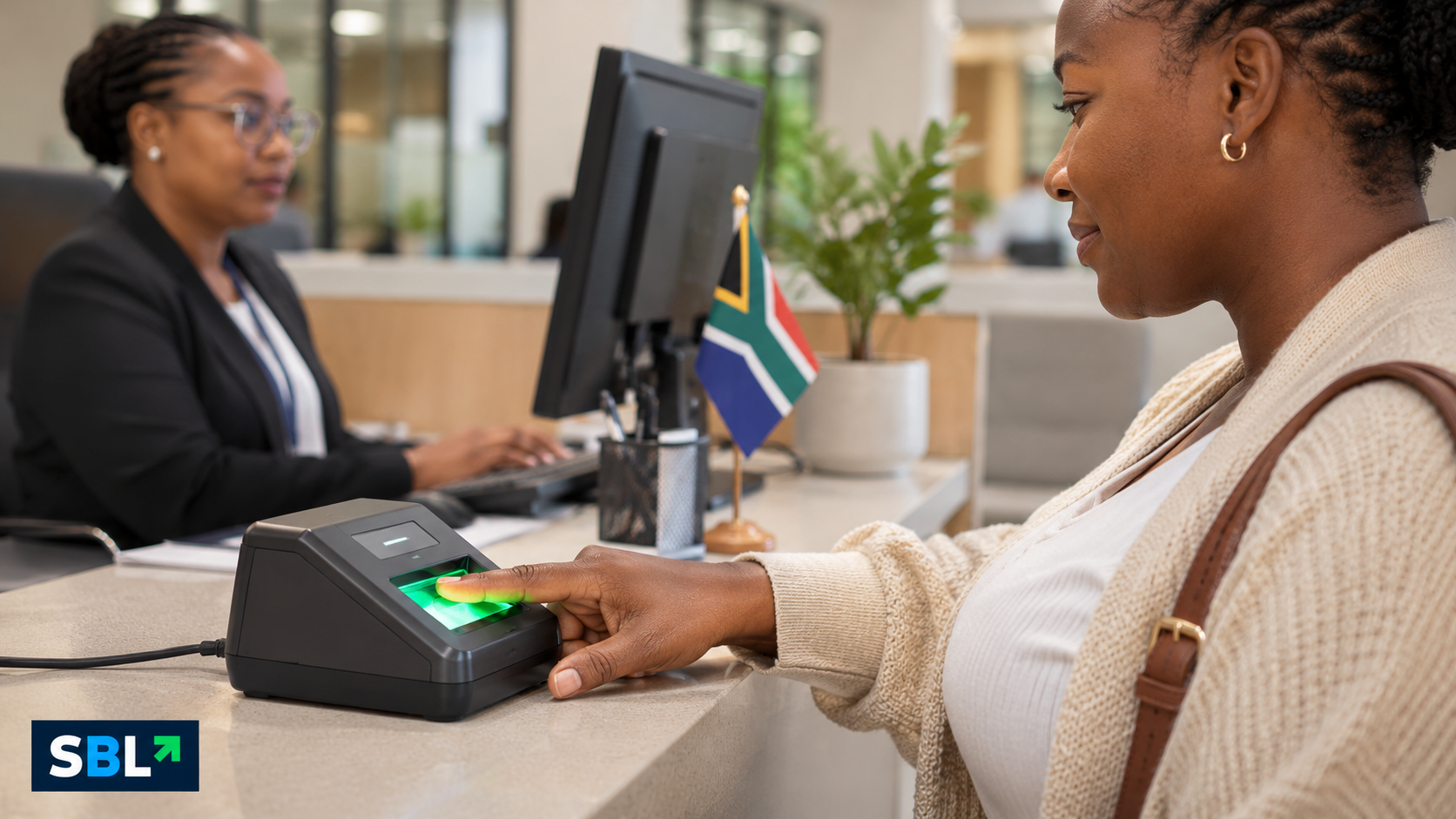
Editorial illustration: SA Business Lens. The scene is illustrative and does not depict a specific bank branch.
A Smart ID application may now fit into a visit to the bank. Walking out with the card is another matter.
Home Affairs said on 11 November that 753 bank branches now offer Smart ID replacement services, taking its combined network with departmental offices to 967 locations. The participating banks are Absa, Capitec, FNB and Standard Bank.
The department describes a walk-in, biometric application taking about five minutes, without a prior booking. But the banks’ own service guides show why customers should check the fee, eligibility and collection arrangements before travelling.
84 more branches in just over two weeks
The latest total is up from 669 branches reported on 26 October. That is 84 additional branches in 16 days, calculated from the two departmental announcements.
Home Affairs says the new channel has served more than one million people since its March launch and has passed the 750-branch target it set for the end of the 2026/27 financial year. These are the department’s reported figures, rather than an independent survey of branch performance.
Five minutes to apply, longer to collect
Standard Bank’s current guide says processing typically takes up to four weeks, although other factors can affect the timing. Customers receive SMS updates and must collect their own card at the branch where they applied. The bank says home delivery is not currently available through its service.
That distinction matters if an ID is needed for an upcoming deadline. A shorter application process does not remove the production and collection stages, so leave time for both.
The price and rules depend on the bank
Standard Bank lists a R140 Home Affairs fee and says it is not currently charging a convenience fee. Applicants need a Standard Bank account, and its in-branch guidance asks customers to bring a green ID book or driver’s licence.
BusinessTech’s March report on Capitec’s rollout put the total at R150: the R140 departmental charge plus a R10 logistics fee. The service is for Capitec clients, who receive notification when their card is ready for branch collection. Confirm the current charge before applying.
Standard Bank’s walk-in service covers replacing a green ID book and reissuing a lost, stolen or damaged Smart ID. Its wider online service list includes first-time IDs and passports.
Those differences are a reason to read the chosen bank’s instructions rather than assume the same checklist applies everywhere. The amounts above are the banks’ published application charges, not a comparison of account fees or travel costs.
Walk-in and booked services are different routes
Standard Bank distinguishes its walk-in replacement service from the online eHomeAffairs route, which requires an appointment at selected specialised branches. A customer who starts online cannot simply finish that application at any walk-in branch.
Home Affairs’ October statement said passports, first-time Smart IDs and home delivery would be added to the new bank channel. Today’s expansion announcement does not establish that all those services are already available at all 753 branches.
Check the branch before leaving home
Use the official Home Affairs branch finder and confirm the chosen bank’s current requirements. The department introduced the finder in August to list participating branches as the rollout expands.
For households, the useful change is a wider choice of places to apply. Turning that into a simpler errand still means checking three things: whether your branch participates, whether it handles your type of application, and what happens after you submit it.
Leave a Reply