Published by SA Business Team
South Africans tired of answering unwanted sales calls may finally have a national tool to push back — but the relief will not arrive immediately.
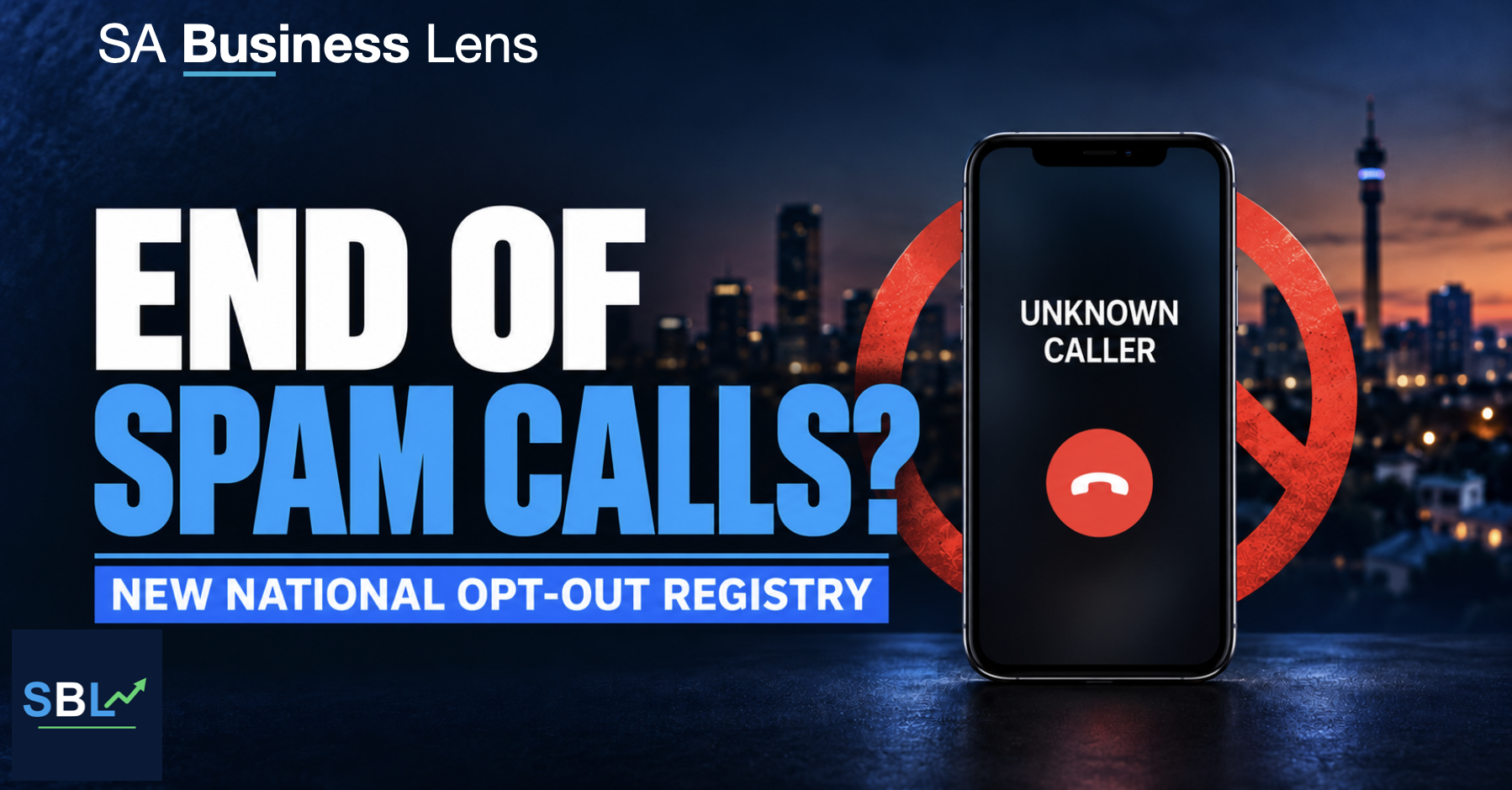
The National Consumer Commission (NCC) has launched a government-administered National Opt-Out Registry intended to help consumers block unwanted direct-marketing calls, SMSes, emails and other electronic messages.
The scale of the problem is enormous. Citing Truecaller’s 2026 South Africa Spam Report, government says South Africans received 17.47 billion spam calls between January and June 2026. That was 25.2% more than during the same period in 2025. Spam SMSes reportedly climbed by 58.9% to 3.71 billion.
What is the National Opt-Out Registry?
The registry gives effect to Section 11 of the Consumer Protection Act, which gives consumers the right to restrict unwanted direct marketing.
Once the consumer-facing system is operational, people will be able to register a pre-emptive block against direct marketers. Legitimate marketers will be required to check — or “cleanse” — their contact lists against the registry before running campaigns.
The system is aimed at businesses conducting direct marketing. It will not necessarily stop fraudsters, criminal syndicates or callers operating outside the law.
Can consumers register now?
Not yet, according to the government’s rollout timetable.
The programme is being introduced in phases:
- September to December 2026: direct marketers must register on the system.
- December 2026 to April 2027: marketers will be given time to cleanse their marketing databases and prepare their systems.
- From May 2027: consumers will be able to register and pre-emptively block unwanted direct marketing.
This distinction matters because early announcements about the launch could leave consumers expecting an immediate end to nuisance calls. For now, the first stage is focused on getting marketers onto the system.
What will businesses have to do?
Direct marketers will have to register and cleanse their lists monthly before starting a marketing campaign. Continuing to contact consumers who have activated a block could place a business in breach of consumer-protection rules.
For reputable companies, this will mean tighter control over customer databases, marketing consent and outsourced call centres. It could also increase compliance costs, particularly for smaller businesses that rely heavily on telephone or SMS marketing.
Will every irritating call disappear?
Probably not. The registry is designed to control direct marketing, not every unknown call. Debt collection, genuine service messages and communications a consumer specifically agreed to receive may be treated differently. Illegal scammers may also ignore the registry altogether.
Consumers should still avoid sharing one-time PINs, passwords or banking details with unsolicited callers. A caller claiming to represent a bank, insurer or government department should be verified using the organisation’s official contact details.
What can you do while you wait?
- Use the block and report-spam features on your phone.
- Ask legitimate marketers to remove your details from their lists.
- Review marketing-consent boxes when signing up for services or competitions.
- Report suspected consumer-law violations to the National Consumer Commission.
- Never provide banking credentials or an OTP during an unexpected call.
The question South Africans will be asking
The registry addresses a problem almost every cellphone user recognises. Its success will depend on whether marketers comply, whether enforcement is effective and whether registration is simple enough for ordinary consumers to use.
How many spam calls do you receive in an average week — and do you believe a national opt-out list will make a difference?


Leave a Reply