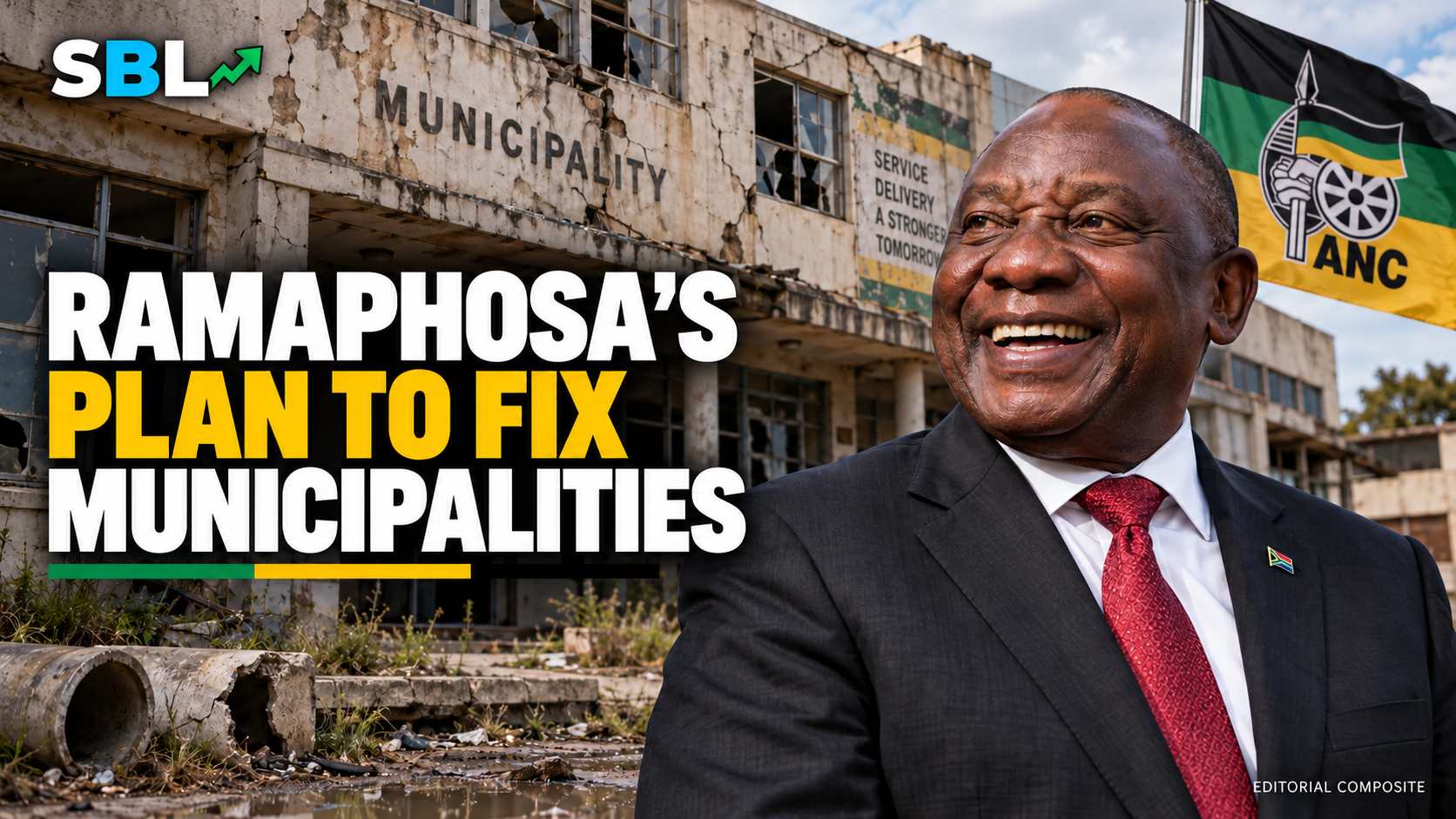
South Africa has approved a Revised White Paper on Local Government aimed at addressing persistent failures in municipal governance, finances and service delivery.
President Cyril Ramaphosa was scheduled to formally launch the policy in Ekurhuleni at 14:00 on Thursday, 22 October 2026, under the theme “Every Municipality Must Work: From Policy to Collective Action”. The Presidency’s advisory confirmed the event and the policy framework, but did not constitute a post-event report.
The White Paper moves away from a one-size-fits-all approach and proposes reforms designed around the different realities of metros, secondary cities, rural municipalities and small towns.
What the revised policy is designed to change
Cabinet approved the final framework in September. Government says it responds to long-running weaknesses in municipal governance, financial management, institutional capacity and basic service delivery. It is intended to strengthen implementation, accountability, institutional coherence and financial sustainability.
| Reform area | What it is intended to address |
|---|---|
| Differentiated governance | Different powers, responsibilities and support based on municipal capacity and local conditions. |
| Professional administration | Merit-based recruitment, less political interference and stronger skills development. |
| Political stability | Clearer coalition rules, greater transparency and safeguards against paralysis. |
| Municipal finances | Stronger revenue collection, grant reform and greater focus on infrastructure maintenance. |
Why municipalities will not all be treated the same
The Presidency said the framework recognises that large metros and smaller rural councils do not have the same revenue base, staffing capacity or development pressures. Support and responsibilities should therefore be matched more closely to each municipality’s circumstances.
Consultations identified five broad pillars: differentiated municipal governance, stronger cooperation between spheres of government, political stability, professional administration and a reformed fiscal framework in which funding follows assigned functions.
Implementation is the real test
Cabinet has endorsed a phased programme jointly led by the Department of Cooperative Governance, the Presidency and National Treasury. A time-limited Transition Management Body and an implementation plan are intended to coordinate the reform process, assign responsibilities and track timelines.
That process still has to move from policy into practice. It will also need to accommodate councils elected on 4 November, municipal budgeting cycles and any legislative amendments required to implement the reforms.
The White Paper is a policy roadmap, not evidence that municipal failures have already been fixed. Its credibility will depend on deadlines, enforcement, capable appointments and measurable improvements in water, electricity, roads and refuse collection.
Sources: The Presidency’s launch advisory; Cabinet statement approving the Revised White Paper; Department of Cooperative Governance.



[…] 03Ramaphosa’s new plan aims to fix South Africa’s municipalities […]