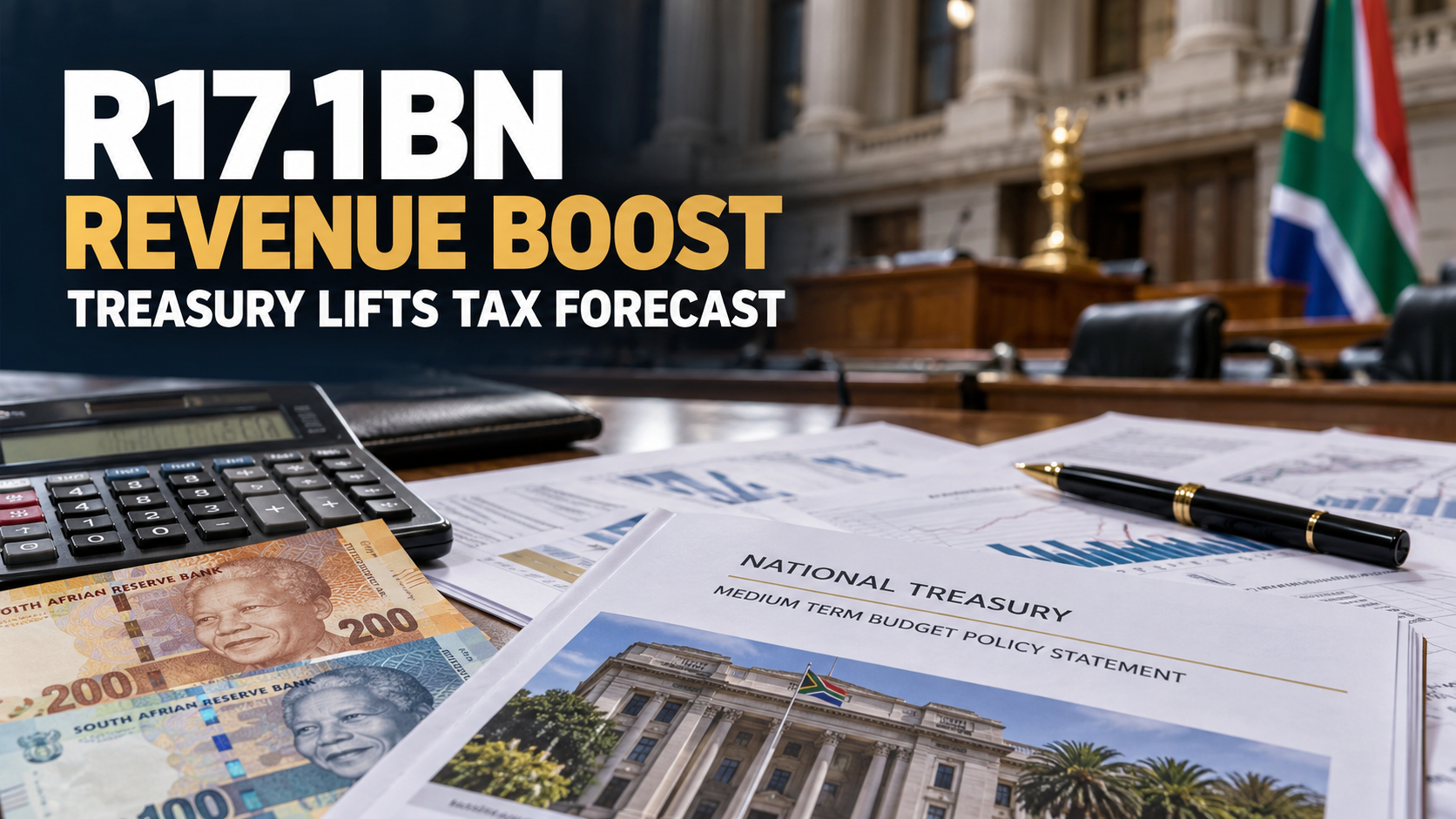
South Africa’s gross tax revenue forecast for 2026/27 has been raised by R17.1 billion after collections from corporate income tax, dividends tax and value-added tax performed better than expected.
Finance Minister Enoch Godongwana announced the revision while delivering the Medium-Term Budget Policy Statement in Parliament on Wednesday.
The improved outlook gives government more room to manage spending pressures, support infrastructure and strengthen the contingency reserve. However, Treasury cautioned that a large part of the increase is linked to higher commodity prices and may not continue over the medium term.
Revenue forecast moves higher
Gross tax revenue is now projected to increase from R2.14 trillion in the current financial year to R2.53 trillion in 2029/30.
According to the official statement, stronger corporate income tax, dividends tax and VAT collections drove the R17.1 billion upward revision from the February estimate.
The wider fiscal picture also includes an additional R6.8 billion from petroleum royalties and R14.3 billion in departmental revenue. In total, tax revenue, non-tax revenue and National Revenue Fund receipts are expected to come in R54.1 billion above the 2026 Budget estimate.
Why it matters
- More fiscal breathing room: The additional revenue can help government absorb spending pressures without relying entirely on new borrowing.
- Infrastructure support: Treasury says the improvement will support projects approved through the Budget Facility for Infrastructure.
- A stronger contingency reserve: Extra funds can provide protection against unexpected economic and budget risks.
- No permanent windfall: Commodity-linked gains can reverse when international prices fall.
SARS targets compliance and illicit trade
Godongwana said the South African Revenue Service is strengthening revenue administration and improving compliance. Its work includes modernising customs and excise systems, expanding cargo scanning, improving track-and-trace capabilities and strengthening frontline enforcement.
The measures are aimed partly at disrupting illegal alcohol and tobacco networks that reduce legitimate tax collections and place compliant businesses at a disadvantage.
Treasury is expected to provide a more detailed update on the National Illicit Economy Disruption Programme in next year’s Budget.
The bottom line
The R17.1 billion revision is positive for the public finances, but it does not remove South Africa’s broader fiscal risks. The sustainability of the improvement will depend on economic growth, consistent tax compliance and whether stronger commodity-related receipts endure.
Sources: SAnews, Gross tax revenue forecast revised upwards; 2026 Medium-Term Budget Policy Statement.


[…] For the wider budget context, see SBL’s report on Treasury’s revised tax-revenue forecast. […]