
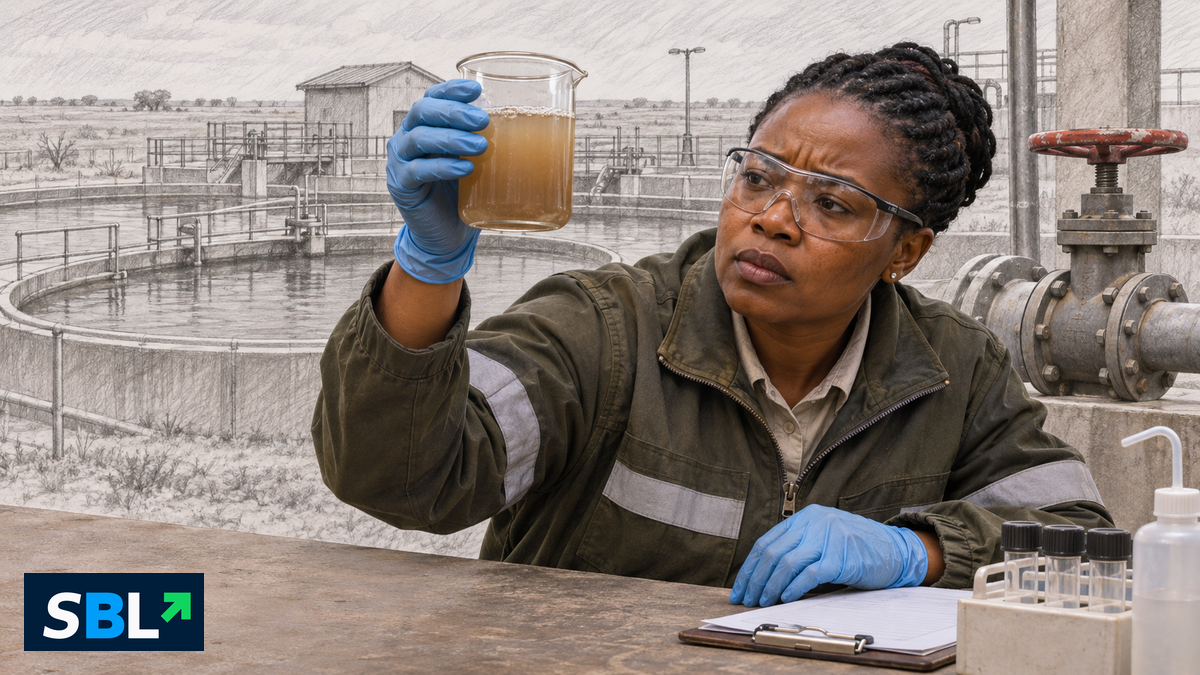
Editorial illustration of cloudy raw-water testing, not the actual Bronkhorstspruit plant or its staff.
Bronkhorstspruit’s water treatment plant stopped operating early on Monday, 16 November, after incoming raw water became too cloudy to treat effectively. Tshwane’s notice gives no confirmed restart time.
The Citizen’s 16 November report quotes Tshwane saying the incoming water is too cloudy for effective treatment. This cloudiness is called turbidity.
Technical teams are monitoring the incoming water. The city says treatment will resume when conditions improve sufficiently for safe and effective processing. The shutdown may affect communities supplied by the plant.
What the notice does not establish
The announcement does not provide a street-by-street outage list, tanker collection points or a restoration deadline. It is an operational update, not a declaration that household tap water is safe to drink.
Eyewitness News reported on 20 October that authorities restricted affected tap water to toilet flushing, despite the plant having reopened at that point. That history shows why operating status and drinking-water clearance are different questions. Monday’s shutdown report does not announce a drinking-water all-clear.
The next useful checks for residents
SBL analysis: Three questions need separate answers: has treatment restarted, has supply recovered in your area, and has the city issued drinking-water clearance? Water flowing from a tap does not, on its own, answer all three.
Do not assume a nearby natural source is a safe substitute. In a 6 November warning reproduced by Municipality News, Tshwane specifically advised against using the natural spring at the Rethabiseng Social Integrated Centre for drinking or other listed household uses. It directed residents to safe sources approved or authorised by the city.
Check the city’s dated notices for operational updates and local collection arrangements rather than treating a restart estimate or an old delivery schedule as confirmed.

Leave a Reply