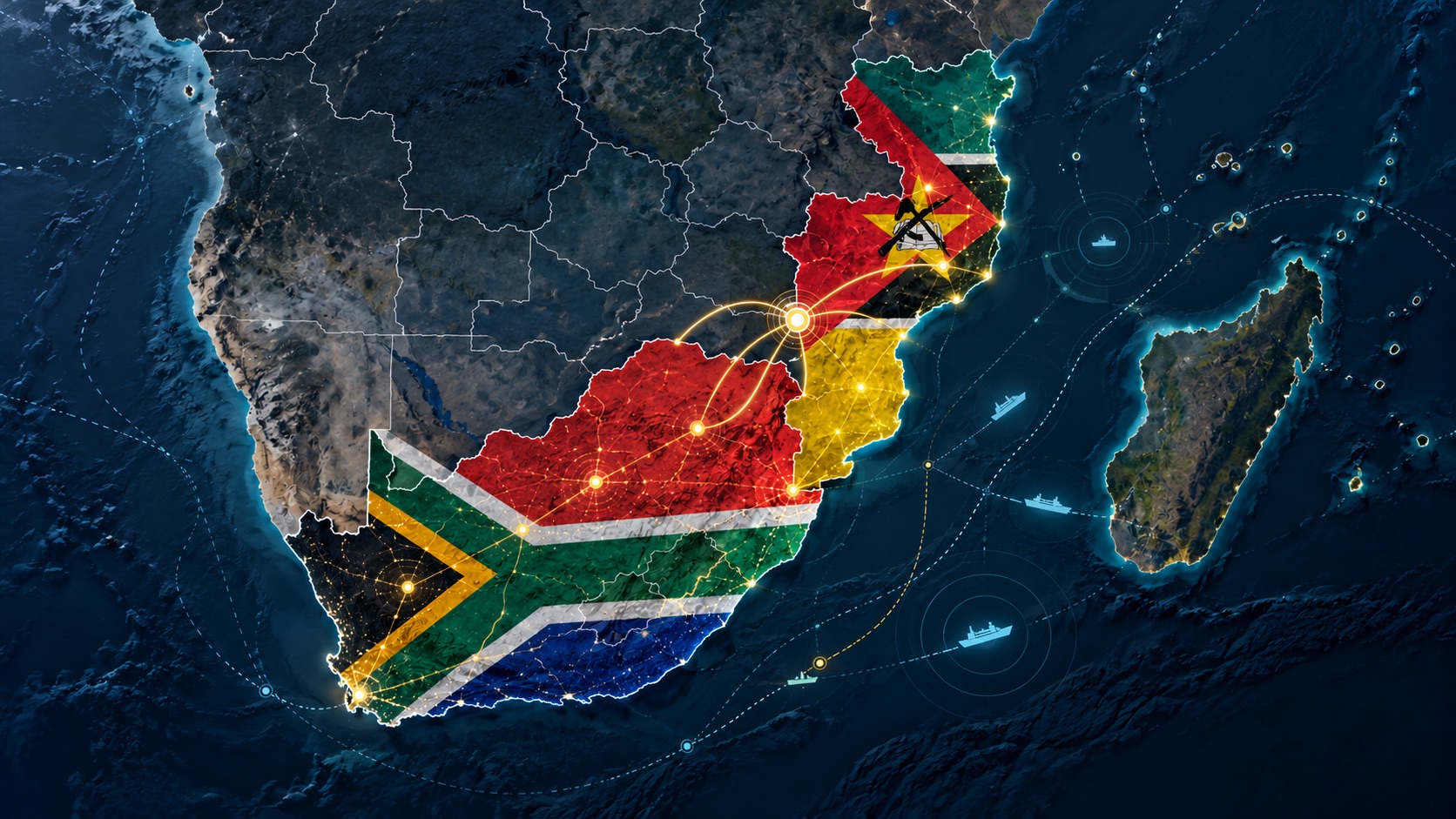
South Africa and Mozambique have renewed their commitment to closer police cooperation against organised crime that crosses national borders.
The commitment was reinforced during a bilateral meeting between South African police leaders and Mozambique’s Minister of the Interior, Paulo Chachine.
The talks followed a meeting of the Trilateral Planning Cell, which brings together South Africa, Mozambique and Tanzania. The regional group focuses on coordinated responses to organised crime.
Closer coordination between police agencies
Acting SAPS National Commissioner Lieutenant General Puleng Dimpane attended the bilateral meeting. Mozambique was represented by Deputy National Commissioner General Fabiõ, while senior officials from both countries also took part.
According to the South African Police Service, the two countries want to strengthen cooperation between their law enforcement agencies. Their aim is to improve coordination and protect people on both sides of the border.
The ministers also reviewed a report on work completed by the group’s operational teams. It covered progress, challenges and areas that need further attention.
They adopted the report and committed to addressing the problems it identified. They also backed the continued implementation of activities already agreed by the participating countries.
Regional group expands
The wider meeting resolved to add Angola and Uganda to the Trilateral Planning Cell. This expands a framework that previously centred on South Africa, Mozambique and Tanzania.
Organised criminal groups often move people, illegal goods and money through several countries. Wider cooperation can help police agencies exchange information and coordinate investigations across those borders.
However, the announcement did not provide new crime statistics, operational targets or deadlines. The value of the agreement will depend on how consistently the countries work together after the meetings.
Why businesses should pay attention
South Africa and Mozambique are closely linked through road freight, tourism, energy projects and regional trade. Crime affecting border posts and transport corridors can delay legitimate goods and increase security costs.
Better coordination could also help authorities identify criminal networks without placing unnecessary pressure on lawful trade. For transport companies and other cross-border businesses, reliable enforcement matters as much as faster border processing.
The two countries said strong working relationships between their police agencies would improve their collective response to organised crime and support regional security.
The next test will be whether the commitment produces faster information sharing, coordinated investigations and visible results along the routes linking the two countries.
Sources: SAnews and the South African Police Service.



[…] Related: South Africa and Mozambique strengthen cross-border cooperation. […]