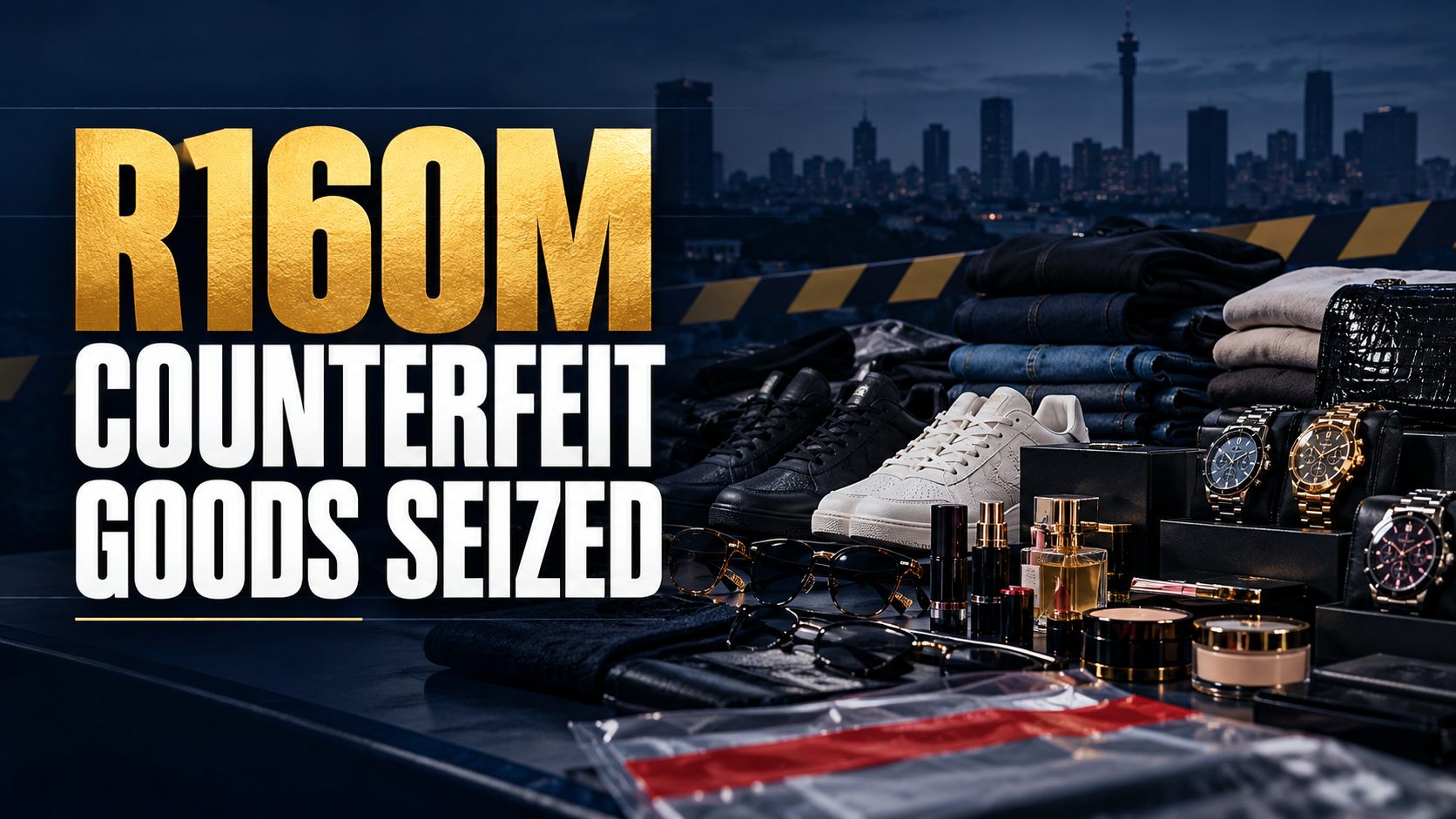
Police have seized more than 62,000 suspected counterfeit items in Johannesburg’s central business district. Authorities valued the goods at over R160 million.
The South African Police Service said its National Counterfeit and Illicit Goods Unit led the operation. Officers targeted several shops inside a retail building during the past week.
What did police seize in Johannesburg?
Officers executed search-and-seizure warrants on Tuesday, according to SAnews.
Public Order Policing members from Pretoria supported the operation. SARS Customs officials and representatives for affected brands also joined the team.
They found clothing, footwear, cosmetics, watches, jewellery and sunglasses carrying high-end brand markings. Police estimated the combined value at more than R160 million.
SAPS said the operation formed part of a national campaign. The campaign targets the illegal manufacture, distribution and sale of counterfeit goods.
Why counterfeit trade matters to businesses
Counterfeit trade does more than damage a brand. It can harm retailers, manufacturers, importers and workers in the formal economy.
Legitimate businesses must meet tax, customs, safety and labour requirements. Illegal traders may avoid those costs and gain an unfair advantage.
Brand owners can lose sales and suffer reputational damage. They may also spend more money investigating fake products and removing them from the market.
SARS Customs joined the operation because cross-border trade forms part of the enforcement picture. However, authorities have not disclosed the origin of these goods. They have also not explained how the products entered South Africa.
Consumers face health and safety risks
Police warn that counterfeit goods can pose health and safety risks. Producers may operate outside regulated systems and ignore recognised quality controls.
This concern becomes more serious when a product touches the body. Fake cosmetics may contain unknown ingredients or come from unsafe facilities.
Packaging that resembles a known brand does not guarantee quality. It also does not prove that the original manufacturer tested or approved the contents.
Consumers should buy from established retailers and question unusually low prices. Poor spelling, unusual labels and inconsistent packaging can also signal a fake product.
What remains unclear
The official statement confirms the seizure, the item count and the estimated value. It does not mention any arrests or criminal charges.
Police have not yet explained what will happen to the affected shops. They have also not identified the supply networks behind the merchandise.
The R160 million figure represents an official estimate of the goods. It does not measure confirmed retail sales or tax losses.
The operation shows the scale of the challenge for police and legitimate businesses. Its lasting impact will depend on the investigation and any prosecutions that follow.
Source: SAnews, reporting information supplied by the South African Police Service.

Leave a Reply