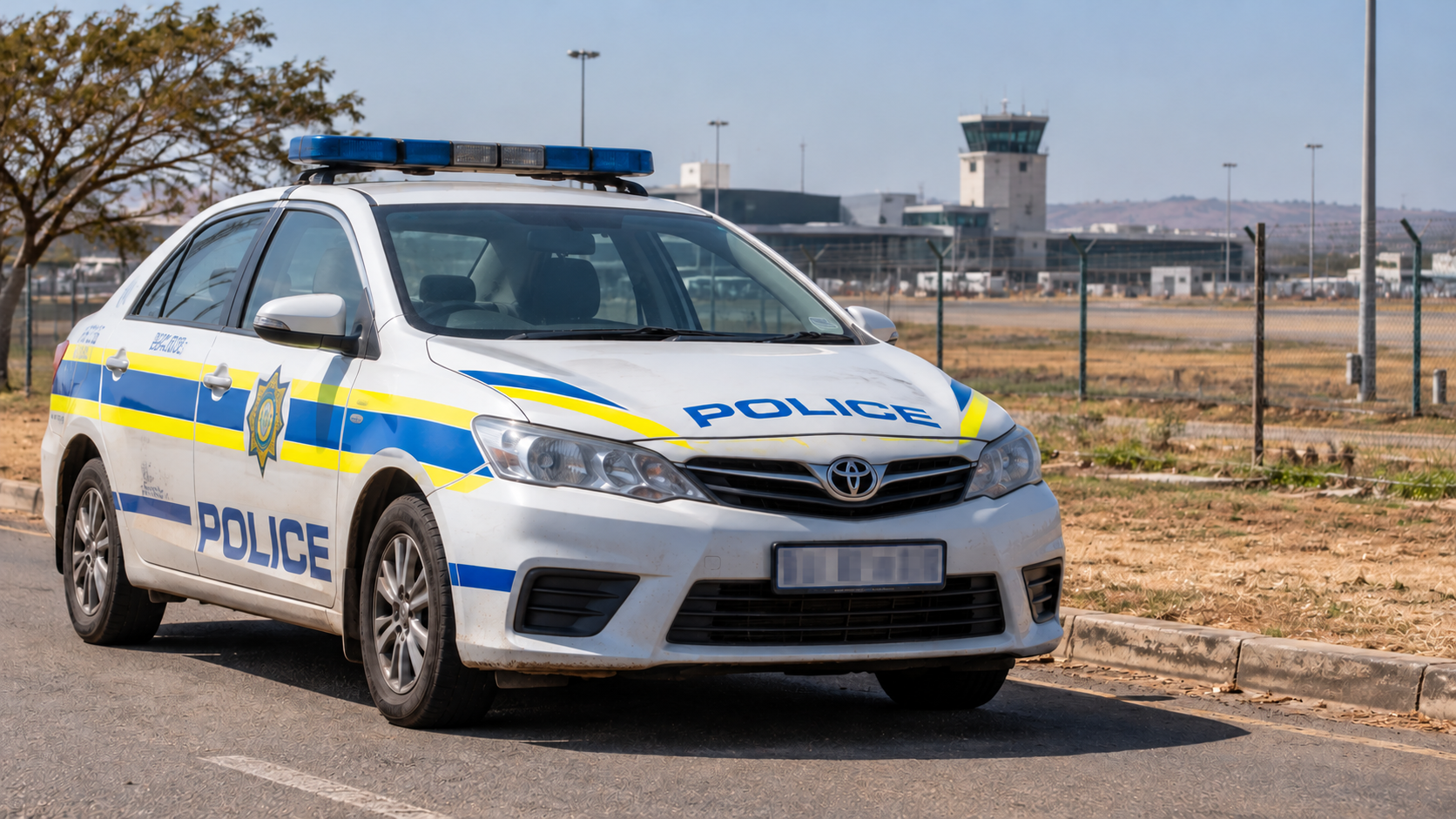
Five police officers stationed at Polokwane International Airport have been arrested on allegations of corruption and defeating the ends of justice.
The arrests took place on Monday evening following an investigation that provincial police said had been under way for about five months. The officers were expected to appear in the Polokwane Magistrate’s Court on Tuesday.
The allegations have not yet been tested in court. The officers remain presumed innocent unless found guilty.
What police have confirmed
Limpopo Police Commissioner Lieutenant General Jan Scheepers confirmed the arrests and repeated the province’s stated zero-tolerance position on criminal conduct by police employees.
Major General Mashaba, the province’s deputy police commissioner responsible for crime detection, said the investigation followed information received from the community. Investigators had also engaged the Department of Justice and Constitutional Development and the National Prosecuting Authority, according to comments reported from the airport.
Police said the investigation had been completed before the arrests were made. Detailed information about the alleged conduct, the identities and ranks of the officers, and the precise charges had not been released at the time of writing.
Why the case matters
Police officers hold powers that ordinary members of the public do not. They can arrest suspects, secure evidence and make decisions that affect criminal cases. Allegations of corruption or interference with justice are therefore serious because they can undermine investigations and public confidence.
The fact that the accused officers were stationed at an airport also raises questions about controls at a sensitive transport facility. It does not, however, establish that the alleged offences involved passengers, cargo or airport security. Authorities have not yet provided that level of detail.
What happens after an arrest
An arrest is the start of the court process, not a finding of guilt. Prosecutors must place the charges before a court and the accused must have an opportunity to respond.
The first appearance usually deals with confirmation of the charges, legal representation and bail. More information may enter the public record when the case is called, although a court can limit disclosure if it may affect an investigation or the rights of the accused.
Internal discipline is separate
SAPS can also consider employment-related steps under its internal disciplinary processes. Those proceedings are separate from the criminal case and can follow a different timetable.
Where police officers are accused of offences, transparent updates are important. The public needs enough information to understand the allegations while the rights of the accused and the integrity of the case are protected.
What remains unknown
- The names and ranks of the five officers.
- The specific incidents behind the corruption allegations.
- Whether other suspects or officials are being investigated.
- The final list of charges placed before the court.
- Whether the officers have been suspended or reassigned.
The bottom line
The arrests are a serious development, but the available information is still limited. The next reliable details should come from the court appearance or a formal police or prosecution update. Until then, claims about what the officers allegedly did should be treated with caution.
Sources: SABC News; Polokwane Review.



Leave a Reply