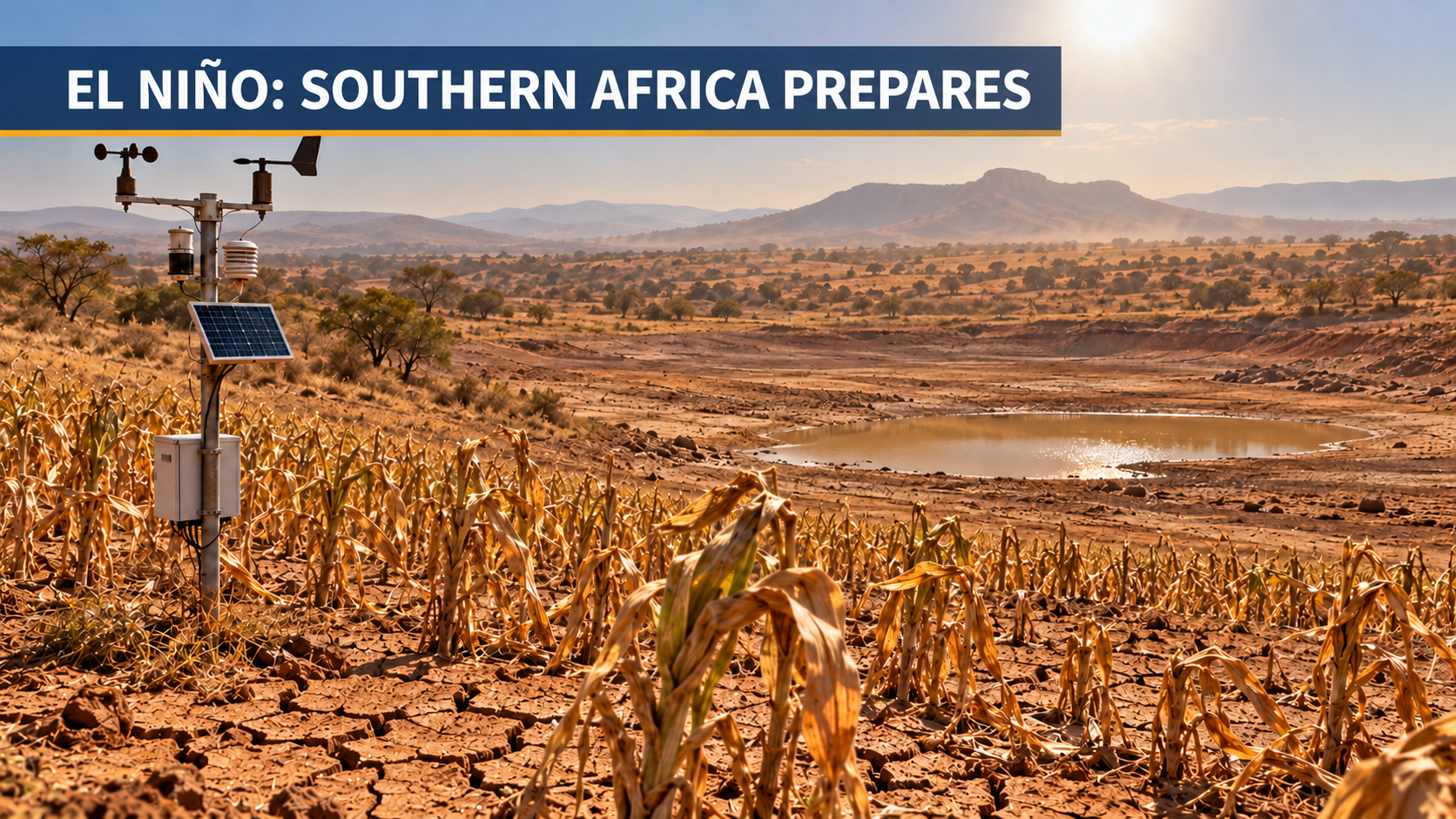
The Southern African Development Community has opened a regional disaster-preparedness workshop in Johannesburg as governments and humanitarian organisations prepare for the possible effects of El Niño during the 2026/27 rainfall season.
According to SADC’s official workshop statement, the four-day meeting began on 20 October 2026 under the theme “From Forecast to Consequence: Anticipating the Cascading Impacts of El Niño 2026/27 in Southern Africa”. It brings together SADC member states, the European Union and humanitarian partners.
What SADC is preparing for
SADC said the discussions are focused on strengthening preparedness, improving anticipatory action and coordinating responses before climate risks turn into humanitarian emergencies.
The SADC regional climate outlook for 2026/27 favours below-normal rainfall across much of central and southern SADC. For October to December, the drier signal covers much of Angola, southern Zambia, Zimbabwe, Mozambique, Namibia, Botswana, most of South Africa, Eswatini and Lesotho.
SADC identifies developing El Niño conditions as an important climate driver, but says rainfall is also influenced by other climate systems. Countries should therefore continue following national, monthly and shorter-range forecasts.
Food, water and livelihoods are at risk
Reduced rainfall and higher temperatures can affect crop yields, livestock, water supplies and electricity systems that depend on reliable water resources. The impact can also move through the economy as lower agricultural output raises pressure on food availability, household budgets and rural incomes.
In its World Food Day statement of 16 October 2026, SADC said 38.8 million people across eight member states experienced acute food insecurity at Crisis level or worse between October 2025 and June 2026. That existing vulnerability increases the importance of acting before another difficult season deepens pressure on communities.
Early warnings must lead to action
Speaking at the workshop, Pumeza Tyali, director of South Africa’s National Disaster Management Centre, called for stronger multi-hazard early-warning systems, better risk information, improved contingency planning and warnings that reach vulnerable communities in time, according to the SADC statement.
The same statement quotes SADC’s head of disaster risk reduction, Dr Manuel Lutango, as saying the workshop would assess progress since the previous regional meeting in 2024 and review what member states and partners are doing in preparation for projected El Niño conditions.
What this means for South Africa
For South Africa, the regional outlook increases the need for farmers, municipalities, water authorities and disaster-management teams to monitor local forecasts and prepare practical responses. The outlook is a warning to plan, not proof that every area will experience drought.
Useful preparation includes reviewing water-management plans, protecting livestock and crops, maintaining emergency supplies and ensuring that warnings are clear, local and accessible.
SADC said the Johannesburg workshop includes organisations such as the Food and Agriculture Organization, the International Federation of Red Cross and Red Crescent Societies, UNICEF, the World Food Programme and the World Health Organization.
Official source links
- https://www.sadc.int/latest-news/southern-africa-prepares-anticipated-impacts-el-nino-202627
- https://www.sadc.int/latest-news/sadc-outlook-favours-drier-conditions-across-much-southern-africa-during-202627-rainy
- https://sadc.int/document/statement-executive-secretary-sadc-he-mr-elias-m-magosi-world-food-day-2026
Primary sources: SADC disaster-preparedness workshop statement; SADC 2026/27 regional climate outlook; and the SADC World Food Day statement.



Leave a Reply