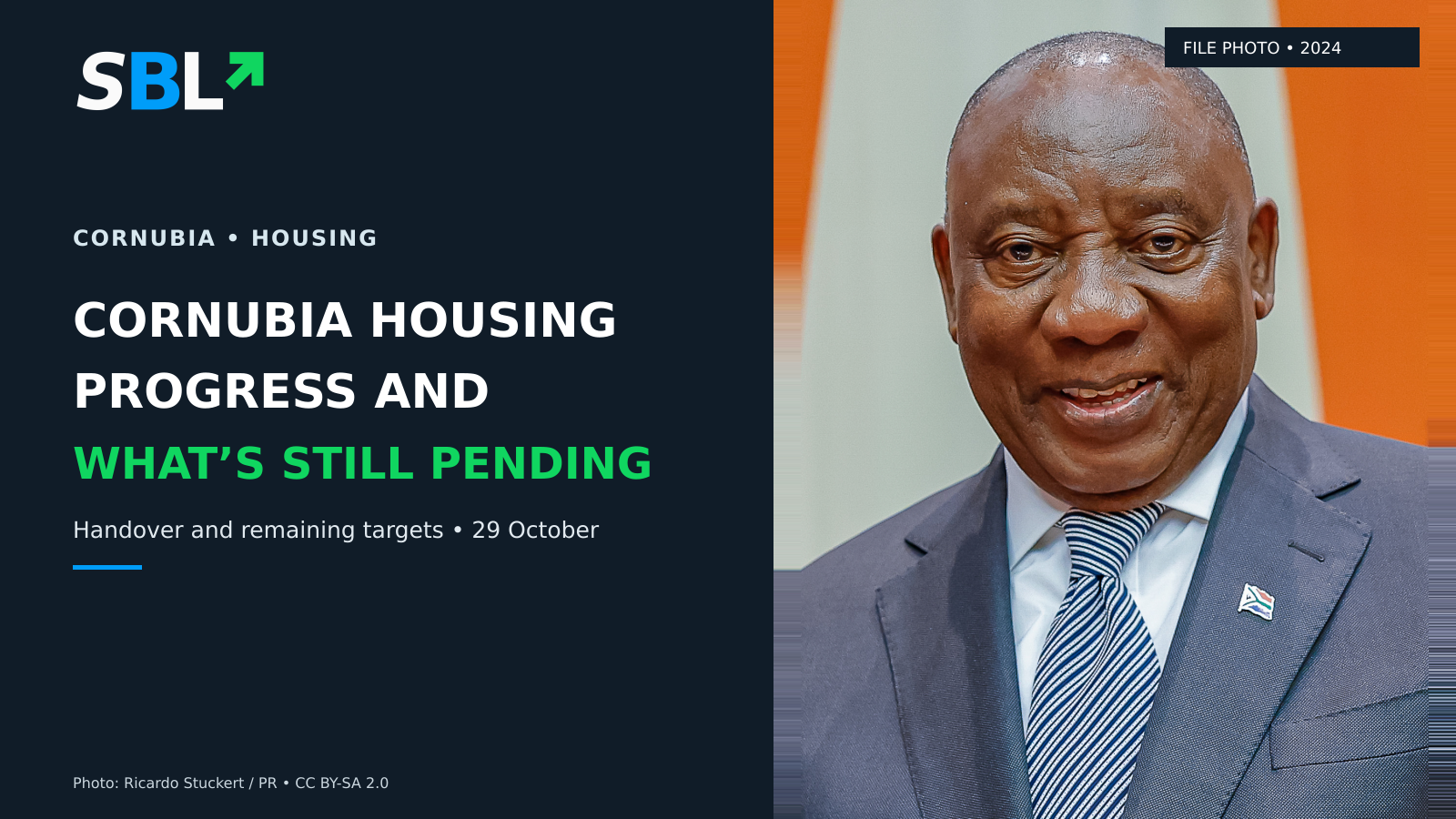
File photograph: Ricardo Stuckert / PR / Lula Oficial, via Wikimedia Commons, CC BY-SA 2.0. Existing crop by Segagustin; displayed and resized in SBL layout. Photograph taken 25 September 2024, not at the Cornubia handover. Source and licence.
The 29 October handover marks progress for families displaced in 2022, while further construction and the mid-2027 target remain unfinished business.
Families displaced by KwaZulu-Natal’s 2022 floods received permanent homes at Cornubia on 29 October, according to President Cyril Ramaphosa’s speech at the housing development. The handover marks a step out of temporary accommodation, rather than the completion of the resettlement programme.
Ramaphosa said another 145 houses were under construction in Phase 2 and set a target of 460 permanent homes completed by mid-2027. His speech did not specify how many homes were handed over on the day.
Keep the housing figures separate
A Presidency advisory dated 26 October had already reported that a first group of flood survivors had moved into permanent homes. It also described a much larger, long-term Cornubia programme of 12,593 planned housing units across subsidised, first-home-finance and social-housing schemes. That wider project should not be confused with the flood-resettlement figures.
The earlier advisory forecast another 146 units by December 2026. The later speech gave 145 under construction, without explaining the difference. Neither figure is a verified count of Thursday’s handover.
The Department of Human Settlements’ advance notice said the visit would assess shelter provision for flood survivors and the use of government buildings for affordable housing. It corroborates the visit’s purpose, not the number of completed homes.
Location matters to the household budget
Ramaphosa described difficult journeys to school and public transport from temporary accommodation. He also acknowledged outstanding title deeds and problems with construction and beneficiary lists.
For residents, a permanent address is an important gain. The financial benefit also depends on the journeys they still have to make, the transport available and what it costs to reach work, school and essential services. A home closer to opportunity can help, but proximity alone does not establish a particular saving or guarantee employment.
The statements reviewed do not provide a household transport-cost comparison or a complete cost account for this handover. It would therefore be premature to attach a rand saving to the move or calculate a cost per home from the wider development’s figures.
What would make progress easier to judge?
A useful public update would separate completed homes, occupied homes, construction still under way and future targets. Families also need clear allocation decisions, relocation dates and information on the documents confirming their tenure.
SBL’s assessment: the handover is meaningful for the households receiving homes. For those still waiting, the next test is a delivery timetable they can rely on, followed by working services and practical access to the city. The mid-2027 target remains a commitment to track, not a result already achieved.




Leave a Reply