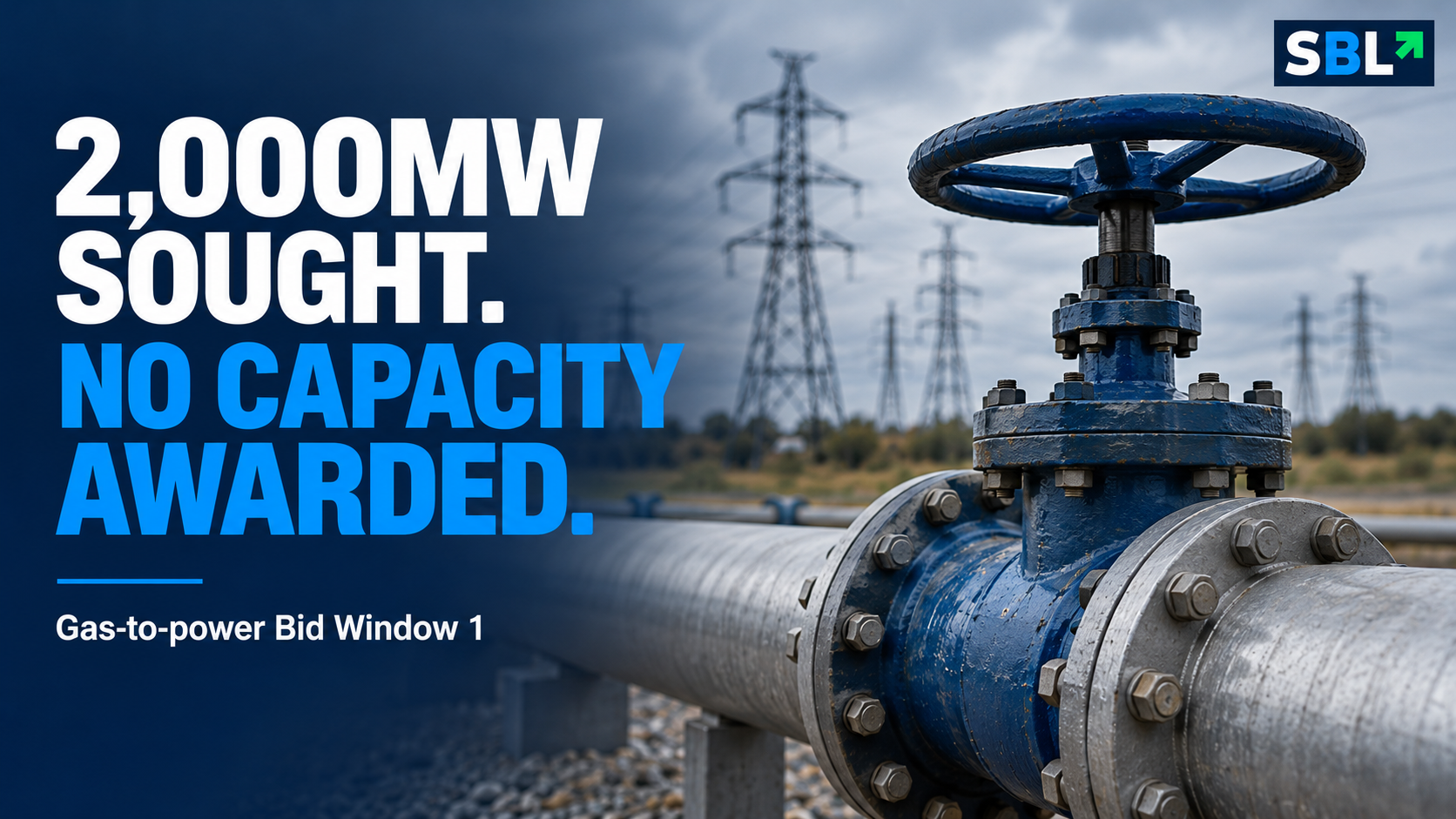
South Africa’s first gas-to-power procurement round has ended without a preferred bidder or a capacity award. The result leaves a planned source of future electricity supply at the procurement stage, rather than moving into contracted delivery.
What happened
The Department of Electricity and Energy announced the outcome on 28 October 2026. Four bids submitted on 29 May offered 2,830MW against a 2,000MW target.
| Measure | Capacity (MW) | Meaning |
|---|---|---|
| Procurement target | 2,000 | Capacity sought |
| Capacity offered | 2,830 | Proposals submitted, not contracted supply |
| Capacity awarded | 0 | No successful award in this round |
Source: Department of Electricity and Energy, 28 October 2026. MW measures capacity, not electricity produced over a period. The table describes Bid Window 1 only.
Why the bids did not qualify
According to the department, bidders could not provide the required assurances of gas supply. This was one of the main reasons none met the mandatory functional requirements, not necessarily the only reason.
SBL analysis: interest is not delivery
The useful distinction is between an attractive investment proposal and a project that can reliably deliver its product. A power station needs more than a proposed site and generating equipment: its fuel arrangements must support the electricity it promises to supply.
More megawatts offered than requested therefore does not establish a successful procurement. For businesses assessing opportunities, the decision is a reason to distinguish expressions of interest from awards, financing and construction. These are different milestones, and should not be treated as interchangeable evidence of progress.
For households, this announcement does not establish a new tariff or an immediate interruption to electricity supply. It concerns proposed additional generation. An estimate of future bill savings, costs or outage risk would require evidence beyond the tender outcome.
What happens next
The department says gas-to-power remains part of its plans. It expects to provide further information before the end of 2026; any subsequent procurement requires the relevant approvals. A replacement timetable is not confirmed in the statement.
What to watch
The next useful test is whether a revised process resolves the fuel-supply requirements and produces viable awards. SBL’s conclusion: the headline number to watch is deliverable capacity, not the total megawatts proposed.
Sources and methodology
This report uses the department’s dated outcome statement, rather than treating an earlier procurement target as a completed project. No electricity-price, household-savings or job-loss estimate has been made. Figures in the comparison are reported totals, not SBL forecasts.
- Department of Electricity and Energy, 28 October 2026, GASIPPPP Bid Window 1 outcome. Last checked 29 October 2026.
Leave a Reply