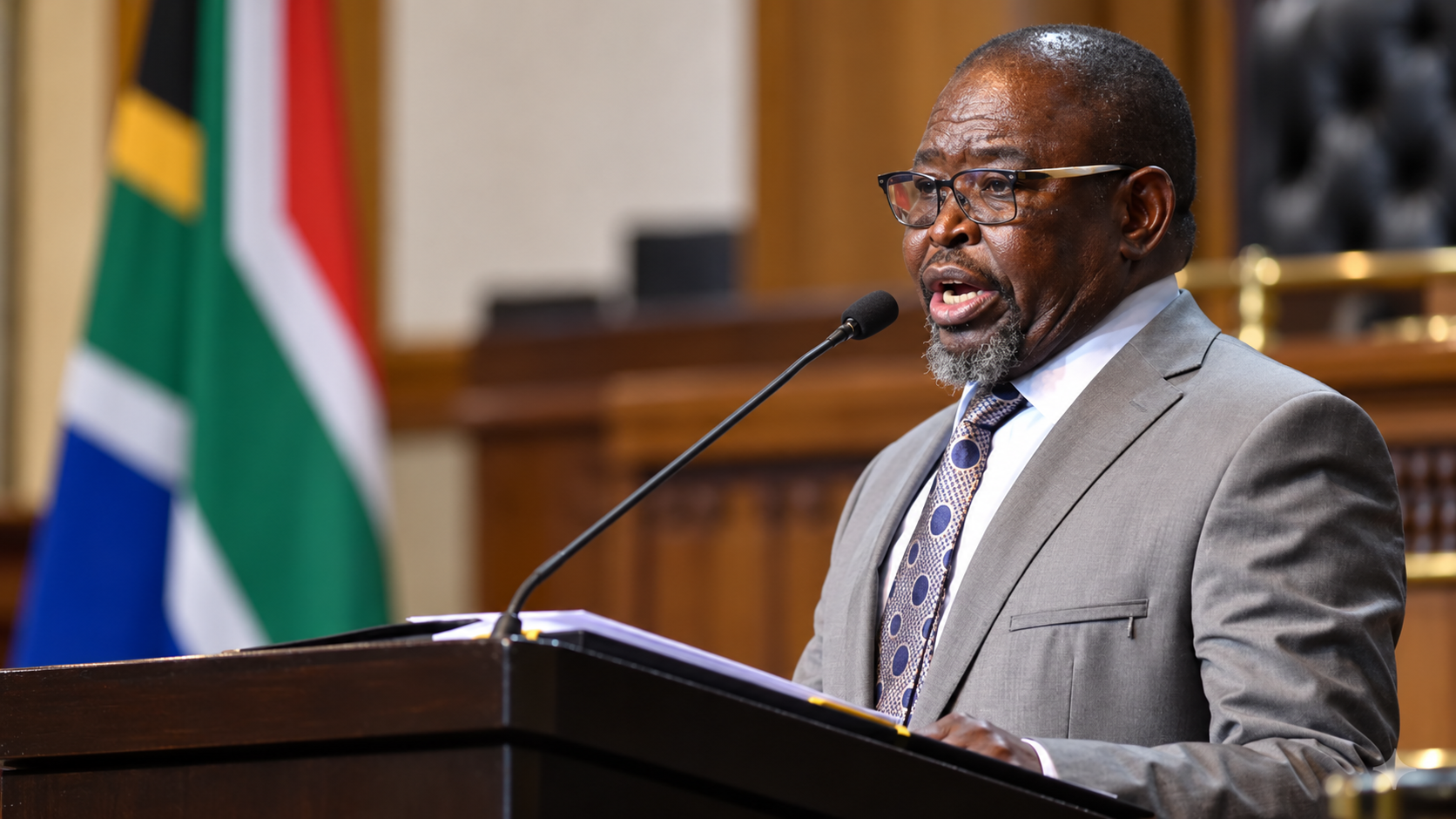
Finance Minister Enoch Godongwana is set to deliver South Africa’s Medium-Term Budget Policy Statement in the National Assembly today, providing an updated view of the economy, public finances and government spending.
The Medium-Term Budget Policy Statement, commonly called the mini budget, gives Parliament and the public a clearer picture of how government plans to balance economic growth, service delivery and fiscal sustainability.
What the statement will cover
The statement is expected to update government’s economic forecasts and outline changes to revenue and expenditure estimates. It will also explain how departmental budgets may be adjusted and how unforeseen or unavoidable spending pressures will be handled.
National Treasury tables the statement each October as part of the country’s annual budget process. It sets the fiscal direction for the national budget, which is delivered in February after the State of the Nation Address.
Why it matters to businesses and households
The updated growth, revenue, debt and spending outlook can influence investor confidence, borrowing costs and expectations for the rand. Businesses will be watching for signs of tighter spending controls, infrastructure priorities and measures intended to support economic activity.
Households will be interested in how government plans to protect essential services while managing limited public resources. The statement can also indicate where departments may receive additional funding or face reduced allocations.
Parliament’s role after the statement
The Medium-Term Budget Policy Statement is required under section 28 of the Public Finance Management Act. It must include multi-year revenue and expenditure projections, together with important macroeconomic forecasts.
Once the statement has been tabled, Parliament’s finance and appropriations committees will consider the proposals and hold public hearings with relevant stakeholders. This process allows Parliament and the public to examine the government’s updated budget plans before the February budget.
Godongwana is also expected to table the Adjustments Appropriation Bill during the same sitting. The bill provides the legal mechanism for approved changes to departmental allocations during the current financial year.
What to watch
Key areas to monitor include revisions to economic growth, tax revenue, government debt, the budget deficit and spending priorities. The figures and policy signals will show whether the fiscal outlook has strengthened or weakened since the February budget.
Source: SAnews, based on information from Parliament.


Leave a Reply