Published by SA Business Lens Team
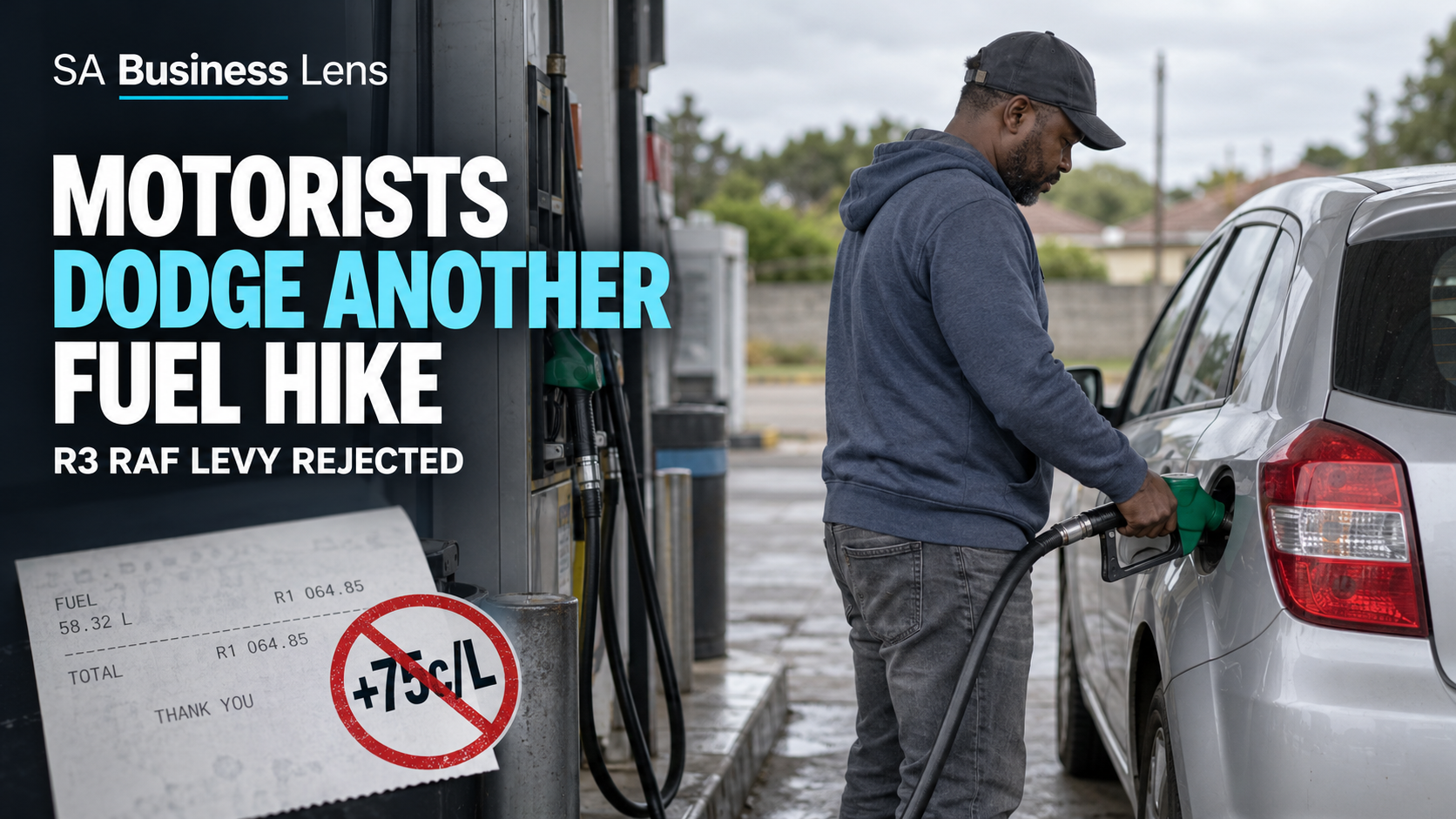
South African motorists have avoided another increase at the pumps after Transport Minister Barbara Creecy rejected a proposal to raise the Road Accident Fund levy from R2.25 to R3.00 per litre.
The RAF had proposed a 75c-per-litre increase to help address its financial problems. That would have pushed the levy up by 33.3%, adding even more pressure to households already dealing with expensive fuel, food, electricity and municipal bills.
The proposed increase has been rejected. Motorists will not pay the extra 75c per litre through the RAF levy.
Transport Minister Barbara Creecy said she would not approach National Treasury for the increase while consumers remain under financial pressure.
What was the RAF asking for?
The RAF is funded mainly through a levy included in every litre of petrol and diesel sold in South Africa. Its levy currently stands at R2.25 per litre after rising by 7c in the 2026 Budget.
The fund proposed increasing that amount to R3.00 per litre. The additional money was intended to help address serious financial pressure at the institution, which compensates people injured in road accidents and the families of people killed on South African roads.
Creecy rejected the proposal and said the priority should be fixing the RAF’s management, finances and operating model instead of placing another burden on motorists.
What would the increase have cost motorists?
An extra 75c per litre sounds small until it is applied to every refill. The table below shows the direct effect the proposed increase would have had.
| Fuel purchased | Extra cost per refill | Extra cost over four refills |
|---|---|---|
| 40 litres | R30.00 | R120.00 |
| 50 litres | R37.50 | R150.00 |
| 60 litres | R45.00 | R180.00 |
| 80 litres | R60.00 | R240.00 |
A driver buying 50 litres four times a month would have paid roughly R150 extra every month, or R1,800 over a year. Families running two vehicles could have felt an even larger increase.
Why this matters beyond the petrol station
Higher fuel costs do not affect motorists alone. Transport, delivery and production costs can eventually flow into grocery prices, public transport fares and the cost of doing business.
The RAF still has a funding problem
Rejecting the levy increase does not solve the RAF’s financial difficulties. The fund faces large claims obligations and has been criticised over delays, legal expenses and management problems.
The Department of Transport is considering broader reforms, including changes to the compensation system and alternative ways of funding the RAF. Government has also appointed new leadership and is working towards a permanent board.
Any alternative funding plan will need careful scrutiny. Moving a charge away from the fuel pump does not necessarily make it disappear. If a new fee is added to vehicle licence renewals or another service, motorists could still carry part of the cost.
Relief for now, but fuel remains expensive
The decision removes the immediate threat of the extra 75c RAF charge. It does not reduce the existing levy or guarantee lower petrol and diesel prices.
Fuel prices continue to be influenced by international oil prices, the rand-dollar exchange rate, transport costs and government levies. That means motorists can still face monthly price changes even though this particular proposal has been rejected.
What should happen next?
The bigger question is how the RAF can pay valid claims without repeatedly turning to motorists for more money. Better financial controls, faster claims processing, fewer unnecessary legal costs and stronger road-safety measures could all form part of a sustainable solution.
For consumers, Creecy’s decision provides welcome breathing room. At a time when many households are cutting non-essential spending, another R150 or more each month would have been difficult to absorb.
Have your say
Would an additional 75c per litre have changed how often you drive?
Should the RAF be funded through fuel, vehicle licence fees or a completely different system? Share your view in the comments.
Sources
- Moneyweb: Increase in RAF levy in fuel price won’t happen on my watch
- EWN: Transport Minister confirms RAF won’t receive additional funds
- Parliament: RAF liquidity challenges


Leave a Reply