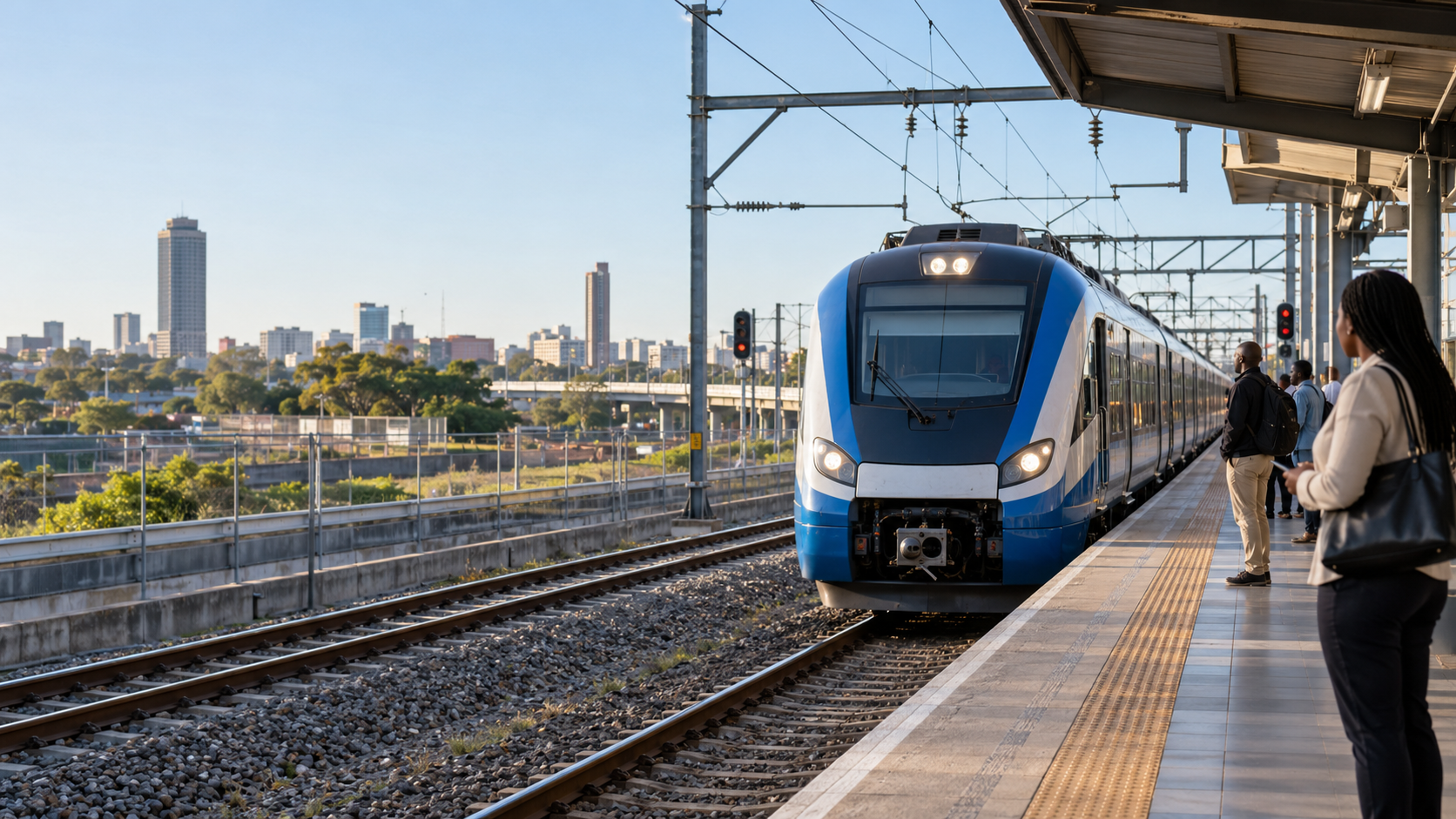
Gauteng’s passenger rail recovery is bringing more trains and commuters back to the Mabopane corridor, but protecting rebuilt infrastructure remains central to keeping services reliable.
By SA Business Lens | 17 October 2026
PRASA says it has restored large parts of Gauteng’s passenger rail network, rebuilding infrastructure damaged by theft and vandalism while increasing services on the busy Mabopane corridor.
Across the province, the Passenger Rail Agency of South Africa has recovered 865 kilometres of overhead electrical equipment, restored 51 substations and rehabilitated 187 kilometres of track. The work has created 4,619 jobs, according to figures released during Transport Minister Barbara Creecy’s visit to the Mabopane line.
Investment rebuilds the Mabopane corridor
About R801.6 million has been invested in overhead electrical equipment, substations, signalling and telecommunications along the Pretoria–Mabopane–De Wildt corridor.
The programme includes 163 kilometres of overhead equipment and the refurbishment of 14 substations. This infrastructure supplies and controls the electricity needed to operate trains on the route.
The rebuilding programme follows extensive damage during the COVID-19 period, when theft and vandalism left parts of the passenger rail system unable to operate.
More trains and passengers return
The number of train trips between Mabopane and Pretoria rose from 613 in the 2020/21 financial year to 11,144 in 2025/26.
When services to Belle Ombre are included, the corridor recorded 17,886 trips in 2025/26. That was 37% more than the 13,087 trips recorded in the previous financial year.
PRASA’s current service plan provides for 81 weekday trips: 57 between Mabopane and Pretoria and 24 between Mabopane and Belle Ombre. Trains to Pretoria run at intervals of about 23 minutes during peak periods.
Passenger journeys increased from 5.2 million in 2024/25 to 7.1 million in 2025/26, a rise of about 36%. By the end of September 2026, the corridor had already carried close to five million passenger trips across more than 10,400 train services.
Reported punctuality on the Mabopane–Pretoria service was about 97.5%, with cancellations at 0.7%. The Belle Ombre service recorded punctuality of about 99%, with cancellations below 1%.
Protecting the rebuilt network
Keeping the system operating will depend on preventing renewed theft and vandalism. PRASA is installing concrete walls, steel mesh fencing and access gates along vulnerable sections of the route.
The protection project covers about 58 kilometres and has a combined value of roughly R1.04 billion. Close to 37 kilometres had been installed at the time of the ministerial visit, representing about half of the overall scope.
The work has employed 284 people from surrounding communities and involved 22 small businesses.
What the recovery means for Gauteng
Reliable passenger rail can reduce commuting costs, improve access to jobs and make it easier for businesses to draw workers from a wider area. More frequent services may also reduce pressure on road transport.
However, the recovery is not complete. Some stations and sections of the network still require work, and Belle Ombre services remain less frequent than the Pretoria route. Sustained maintenance, security and clear passenger information will determine whether the gains last.
PRASA reported customer satisfaction of about 77% on the corridor, leaving room for improvement even as train availability and punctuality strengthen.
Have restored passenger rail services made your commute easier, or are reliability and safety still concerns? Share your experience in the comments.



Leave a Reply