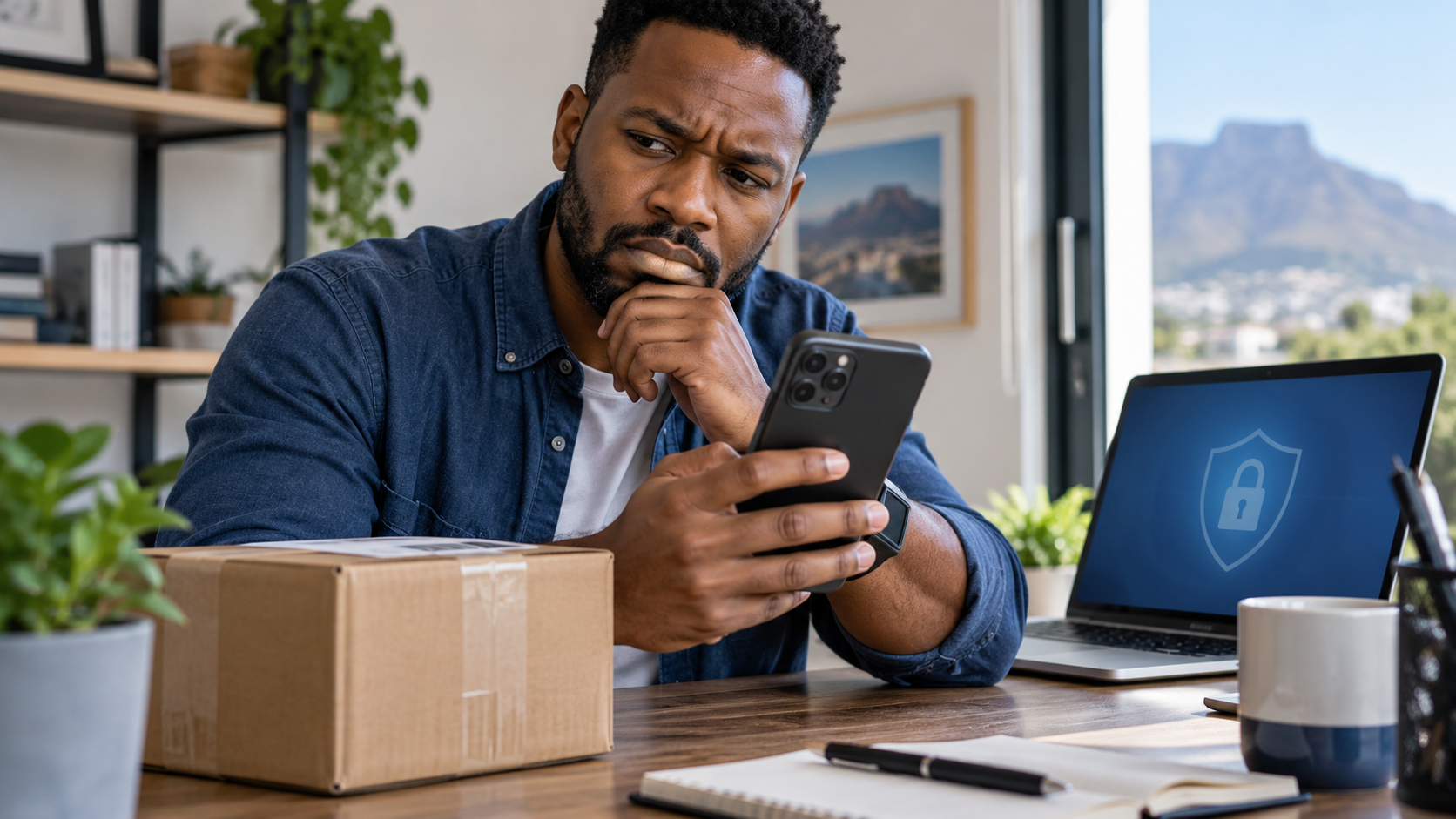
Messages about delayed deliveries or locked accounts can look convincing. The Film and Publications Board is urging South Africans to pause before clicking.
A message arrives saying your parcel cannot be delivered. Another warns that your account has been locked. Both may look legitimate—but the link could be designed to steal your personal information.
These are among the examples highlighted by the Film and Publications Board (FPB) in an online-safety advisory reported by SAnews on Saturday, during Cybersecurity Awareness Month.
Check through a separate channel
The FPB advises checking suspicious senders and visiting the organisation’s official website directly rather than following a message’s link.
An unexpected warning should prompt verification before action, particularly when it asks for personal information.
One password should not unlock everything
Reusing a password across email, banking and social media creates a wider risk if that password is stolen.
The FPB recommends unique passwords, using a password manager where needed, enabling two-factor authentication and installing software updates promptly. These updates often include security fixes.
Why businesses should pay attention
The wider push for better cybersecurity also extends to public services. Ahead of Gauteng’s cybersecurity summit earlier this month, the provincial government stressed that digital systems require continuous testing, monitoring and improvement.
For small businesses, the practical lesson is to make verification part of everyday work. As an additional precaution, an unexpected request to change a supplier’s banking details should be checked using a contact number already on record.
The aim is straightforward: slow down when a message pressures you to act quickly, and verify the request before sharing information or making a payment.


Leave a Reply