Published by SA Business Lens Team
There is a version of success that is easy to photograph.
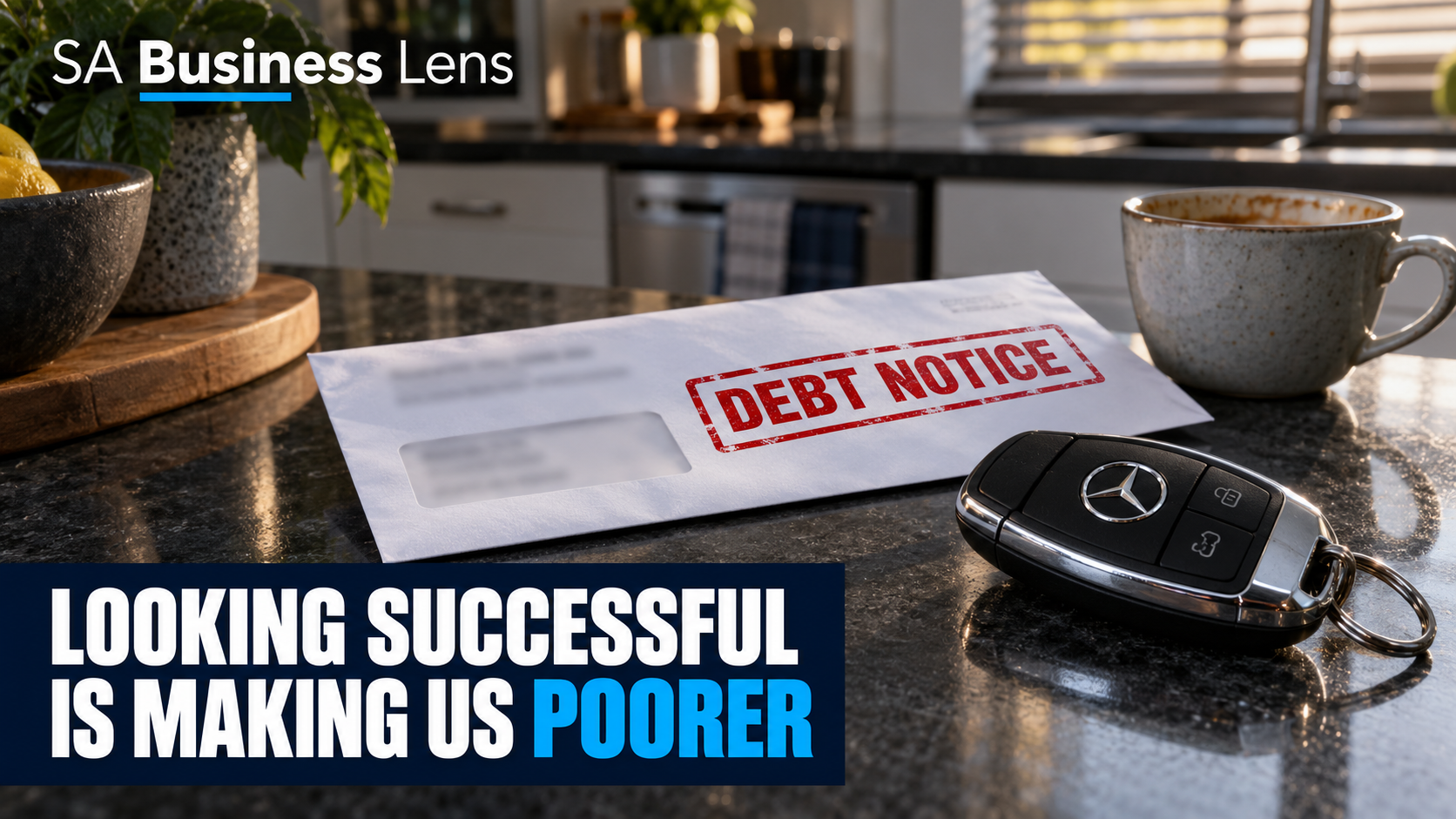
It is the new car in the driveway, the latest phone, the restaurant table covered in cocktails and the weekend away that appears online before the bags have even been unpacked.
What the photograph does not show is the monthly instalment, the credit card balance or the anxiety that arrives a few days before payday.
For many South Africans, looking successful has become expensive.
The pressure is especially strong on social media, where we mostly see the best parts of other people’s lives. Promotions are announced, new cars are celebrated and holidays are documented in perfect detail. Nobody posts a screenshot of the debit orders that follow.
It creates the impression that everyone else is moving forward faster than we are.
A person may have a perfectly reliable car but feel embarrassed because it is old. A phone that still works suddenly seems inadequate when a newer model appears. A quiet weekend at home can feel like failure when everybody online appears to be at a restaurant, concert or coastal hotel.
This is how unnecessary spending starts to feel necessary.
The problem is not enjoying nice things. There is nothing wrong with buying a good car, travelling or celebrating an achievement when you can afford it.
The problem begins when purchases are made mainly to influence what other people think.
That approval is usually brief. The repayment is not.
Cars are a good example. In South Africa, the vehicle someone drives is often treated as a public statement about their career and income. A promotion can quickly become a reason to upgrade, even when the existing vehicle is fully paid off.
The new car brings a larger instalment, higher insurance premiums and more expensive maintenance. Add fuel, tyres and unexpected repairs, and a symbol of progress can quietly become the biggest source of financial stress in the household.
The same pattern appears in smaller purchases.
A new phone contract may not seem excessive when viewed as a monthly amount. Restaurant bills appear manageable when split among friends. Clothing bought on credit feels cheaper because payment is delayed.
Individually, each expense looks reasonable. Together, they can consume the money that should be building real security.
Real financial progress is rarely impressive to look at. It is paying off debt, building an emergency fund and having enough money left at the end of the month.
It is being able to repair a car without borrowing or survive a few months without an income.
None of that makes a particularly exciting Instagram post.
The pressure to perform success also affects relationships. People agree to trips they cannot afford because they fear disappointing their friends. They attend every celebration, buy expensive gifts and keep quiet about their financial limits.
Saying “I cannot afford that right now” can feel more embarrassing than taking on debt.
It should not.
Being honest about money is not a sign that somebody is failing. It may be the clearest sign that they understand their priorities.
There is also a wider social cost. When expensive consumption becomes the accepted picture of success, young people receive the message that appearance matters more than stability.
A financed lifestyle looks more impressive than a modest one, even when the person living modestly is in a far stronger position.
We need a better definition of success.
Success can be driving the same car for another year because it still works. It can be cooking at home, declining an expensive invitation or choosing not to upgrade a phone.
It can be supporting family, sleeping without debt anxiety and making decisions without needing strangers to approve them.
This does not mean people should stop enjoying their lives. Saving every rand while never doing anything enjoyable is not a healthy answer either.
The goal is balance and honesty about what we can afford.
Before making a major purchase, it may help to ask a simple question: would I still want this if nobody else ever saw it?
If the answer is yes, the purchase may genuinely add value to your life. If the answer is no, you may be buying an audience rather than buying something for yourself.
The people we are trying to impress are often facing the same pressure. They may also be using credit, stretching their salaries and wondering how everybody else seems to afford so much.
Someone has to be the first person to admit that not every dinner, trip or upgrade fits the budget.
Looking successful can win attention for a moment. Being financially secure creates freedom that lasts much longer.
The two are not always the same thing.
What have you stopped buying to impress other people? Join the conversation.
Leave a Reply