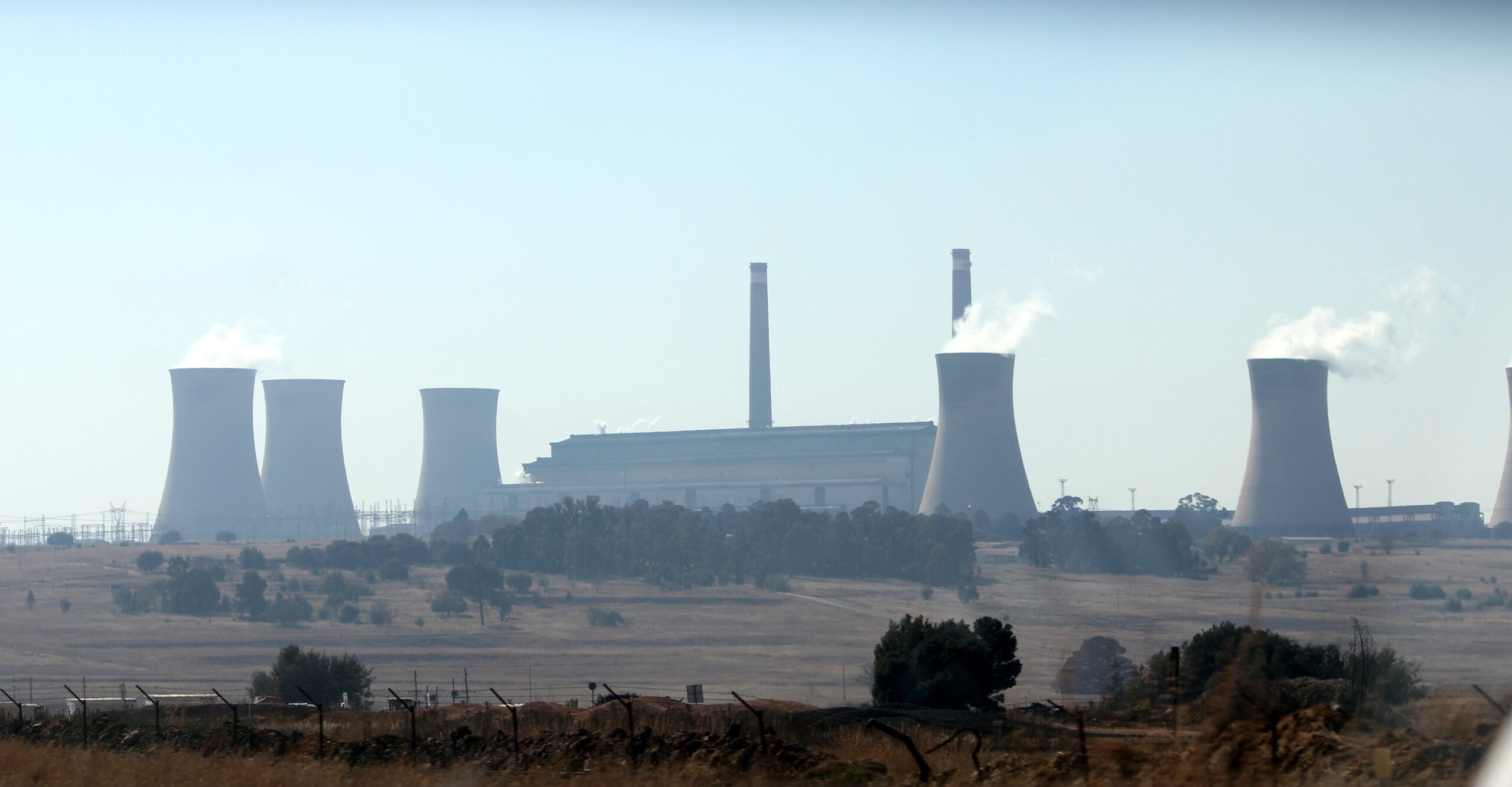
Arnot coal-fired power station, June 2019. File photo: JMK/Wikimedia Commons, CC BY-SA 4.0. Not a diesel-turbine facility or a photograph from the reporting week.
What changed
Eskom’s latest weekly update shows that plant availability recovered from the previous week. The comparison with the matching weeks of 2025 provides an important qualification.
| Weekly period | 2026 EAF | Matching 2025 EAF |
|---|---|---|
| 16–22 October | 64.84% | 65.81% |
| 23–29 October | 69.99% | 71.19% |
Sources: Eskom updates published 23 October 2026 and 30 October 2026. EAF is the share of generating capacity available.
The week-on-week improvement was 5.15 percentage points. Availability nevertheless remained below the matching week last year, so a rebound and a year-on-year shortfall can both be true.
| Period | Share of capacity |
|---|---|
| 2026 | 12.70% |
| 2025 comparison | 9.46% |
Source: Eskom, 30 October 2026. Company-reported percentages.
The earlier weekly report said diesel had been used during peak demand and to maintain reserves. Eskom says it did not use its diesel-fired open-cycle gas turbines to generate electricity during the latest week, making that a useful change in operating conditions.
What the R4.81 billion figure means
Eskom’s diesel-spending comparison covers the financial year to date, 1 April–29 October 2026, against the corresponding period last year. It is not a comparison of spending in the latest two weeks.
| Period or comparison | Amount (R billion) |
|---|---|
| 1 April–29 October 2026 | 1.26 |
| Corresponding period last year | 6.07 |
| Year-on-year reduction | 4.81 |
Source: Eskom, 30 October 2026. Company-reported, rounded amounts. Difference: R6.07 billion minus R1.26 billion equals R4.81 billion.
The 23 October update had already reported the same cumulative spend and year-on-year reduction shown in the table. The latest report repeats those amounts; it does not announce an additional saving of that size in one week.
SBL analysis: why this matters
For a small manufacturer, restaurant or household, the useful question is whether electricity can be supplied reliably without greater reliance on costly backup generation. One encouraging week provides evidence about current operations, but it cannot settle that question for the months ahead.
These figures describe Eskom’s diesel expenditure, not the electricity tariffs paid by households or businesses. The operational update announces no tariff cut, so the reported cost reduction should not be read as a promised reduction in customers’ bills.
Maintenance also requires a balanced reading. Taking equipment out of service reduces what is available now, but judging that work only by the current week’s availability would miss its intended longer-term purpose. The test is whether dependable capacity returns afterwards.
What to watch next
Eskom says its next update is due on 6 November. The next report will allow readers to assess whether the availability rebound persists and whether diesel generation resumes.
SBL bottom line
This week’s useful development is the combination of recovering availability and no reported diesel-fired generation. It is encouraging operational news, not evidence that electricity is now cheaper or that every customer’s supply is guaranteed.
Reporting limitation
Eskom reports no weekly turbine generation, but its cumulative output changed slightly between the two published updates.
| Eskom update | Cumulative output (GWh) |
|---|---|
| 23 October 2026 | 163.89 |
| 30 October 2026 | 163.90 |
| Unexplained difference | 0.01 |
Sources: Eskom updates published 23 October 2026 and 30 October 2026. The releases do not explain the difference, and SBL could not independently reconcile it.
Sources and methodology
Eskom releases published 23 and 30 October 2026, linked above. Weekly periods: 16–22 and 23–29 October respectively. The week-on-week EAF change is calculated from the two published values and equals 5.15 percentage points. Figures are company-reported, not independently audited by SBL. Prepared and last checked: 31 October 2026.




Leave a Reply