Published by SA Business Lens Team
Formula 1 is returning to Africa, but the engines will not be roaring around Kyalami.
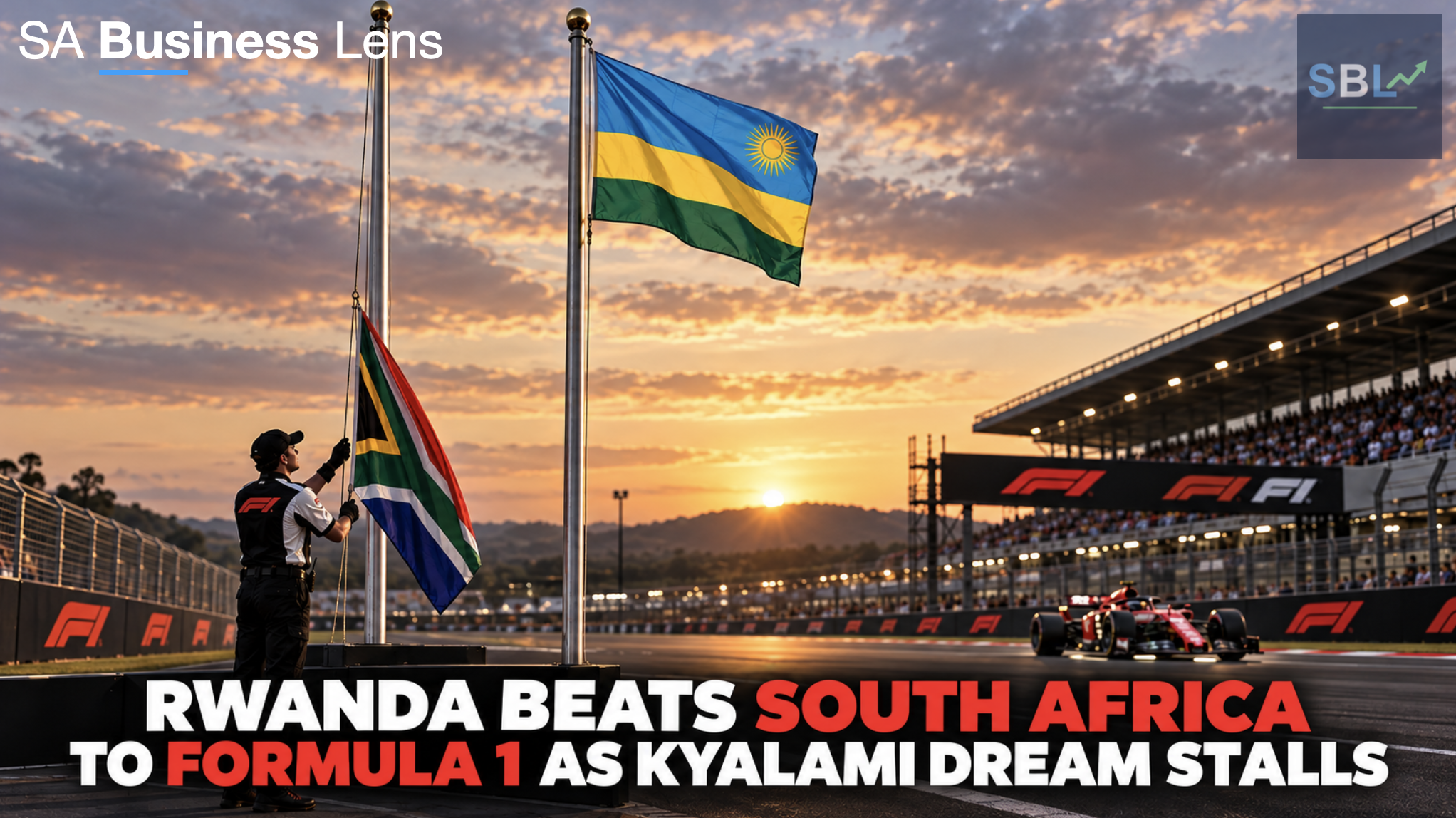
Rwanda has secured a landmark 10-year agreement to host the African Grand Prix from the early 2030s. The announcement brings Formula 1 back to the continent for the first time since South Africa hosted the final race at Kyalami in 1993.
For South African motorsport supporters, the news is bittersweet. Africa is finally returning to the Formula 1 calendar, but Rwanda has captured an opportunity many believed belonged naturally to South Africa.
Rwanda arrived with a complete plan
Rwanda plans to construct a purpose-built Formula 1 circuit in Bugesera, approximately 40 kilometres south of Kigali.
The circuit will be located near the country’s new international airport and is expected to incorporate Rwanda’s hilly landscape. Formula 1 has described the planned track as a fast and flowing circuit, featuring elevation changes and views across the surrounding area.
The agreement will run for 10 years once the circuit is ready to host its first race.
Formula 1 president and CEO Stefano Domenicali said the organisation wanted to return to Africa with the right partner, a long-term commitment and a clear plan.
That appears to be where Rwanda gained the advantage.
The country presented Formula 1 with more than a proposed racetrack. It offered a broader tourism, investment and national-branding strategy built around the race.
Rwanda already hosts several international sporting and political events. Its government has also invested heavily in promoting the country through global partnerships under its Visit Rwanda campaign.
What happened to Kyalami?
Kyalami was once considered the obvious home for Formula 1’s return to Africa.
South Africa has the continent’s strongest historical connection to the sport, an established motorsport audience and an existing circuit close to Johannesburg’s hotels, airports and business districts.
The government publicly supported a bid to bring Formula 1 back to the country. There were also plans to upgrade Kyalami to the FIA Grade 1 standard required to host a Grand Prix.
However, enthusiasm was not enough to produce a final agreement.
Reports have pointed to the cost of upgrading the circuit, the hosting fee and the financial guarantees required by Formula 1 as major obstacles. South Africa’s bid repeatedly generated excitement, but it never reached the point of a confirmed long-term contract.
Rwanda, meanwhile, was willing to commit to a purpose-built circuit and a decade-long hosting agreement.
That contrast matters. Formula 1 was not simply choosing the country with the most famous track. It was looking for a partner willing to finance and support the event for years.
What South Africa has lost
A Formula 1 weekend attracts international visitors, sponsors, broadcasters, racing teams and corporate guests.
Hotels, restaurants, transport providers and tourism businesses all benefit from the crowds surrounding a race. The host country also receives hours of international television exposure.
South Africa already has much of the tourism infrastructure required to support an event of this size. Johannesburg’s location and Kyalami’s history could have made the race one of the most recognisable stops on the calendar.
Losing the African Grand Prix does not only hurt national pride. It also means losing a valuable opportunity to attract visitors and market South Africa to a large international audience.
The government must also consider why a smaller country was able to present Formula 1 with a more convincing long-term proposal.
Rwanda still has work to do
The agreement does not mean Formula 1 cars will be racing in Rwanda next year.
The Bugesera circuit still needs to be built and approved to the FIA’s highest safety and infrastructure standards. The first race is only expected in the early 2030s.
Large projects can experience construction delays, rising costs and political complications. Rwanda will have to prove that it can turn an ambitious announcement into a completed international circuit.
South Africa’s opportunity may therefore not be completely finished. Formula 1 could eventually support more than one race on the continent, particularly if its African audience continues growing.
Kyalami could still pursue the required upgrades and position itself for a future place on the calendar.
A win for Africa, but a warning for South Africa
The return of Formula 1 is an important moment for African sport.
The continent has waited since 1993 to host another Grand Prix. African supporters will finally have a home race, even if they have to wait several more years for it.
For South Africa, however, the decision should be a warning.
History, infrastructure and a famous circuit do not guarantee major international events. Host countries need credible financing, firm agreements and the ability to move quickly.
Rwanda brought Formula 1 a long-term plan. South Africa brought years of promises.
This time, the plan won.
Sources: Formula 1, FIA, Associated Press and Mail & Guardian.



Leave a Reply